" fill="%23faf1da" stroke-width="1.8"/>%0A <ellipse cx="64.5" cy="50" rx="43" ry="12" transform="rotate(4 64.5 50)" stroke="%23938466"/>%0A <path d="m26 44 1 10m3-12 1 14m3-14 1 15m3-14 1 15m4-14 1 14m4-13 1 14m39-10-1 10m5-9-1 8m5-7-1 5" stroke="%23b2a181" stroke-width=".7"/>%0A <path d="M55 60c3-10 12-14 23-10l47-44c7-6 15-6 15-2 0 5-9 11-14 14L82 60c-8 4-21 4-27 0Z" fill="%23bc8c48" stroke-width="1.6"/>%0A <path d="M61 59c3-5 9-8 15-5l-4 7m8-8 49-45 6-4M84 52l45-41" stroke="%2376562e" stroke-width="1"/>%0A <path d="M20 53c18 14 69 19 90 2" stroke="%23514431" stroke-width="2"/>%0A <path d="M27 59c22 11 59 14 78 2" stroke="%23fff9e9" stroke-width="2"/>%0A <path d="m48 87 1 1m7 8 1 1m6-12 1 1m6 12 1 1m6-9 1 1m-24 9 1 1m19 4 1-1m10-16 1 1" stroke="%23aa9b7c"/>%0A </g>%0A</svg>%0A)
Slow-Braised Lamb Ragu with Pappardelle
A patient stovetop braise turns lamb shoulder into a rich tomato ragu that grips broad ribbons of pappardelle.
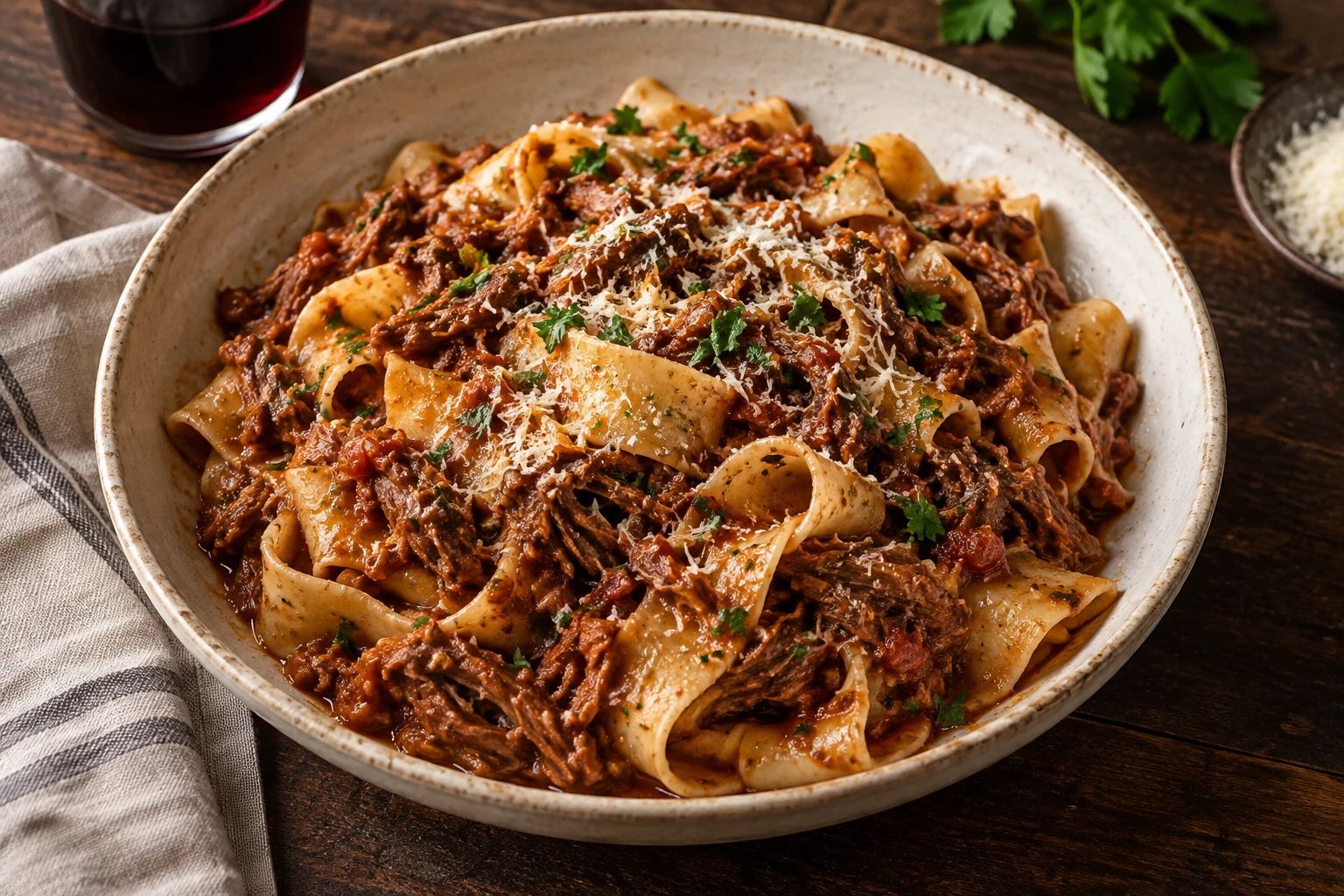
This ragu builds depth in layers: a dark sear on the lamb, slowly softened soffritto, caramelized tomato paste, and a gentle braise with rosemary. Shredding the tender meat back into the reduced sauce keeps the texture generous without leaving large pieces on the plate.
Pappardelle belongs in the pot with the ragu for the final minutes. Tossing the ribbons with starchy pasta water and Pecorino binds the sauce to the pasta instead of leaving it pooled underneath.
Make the browning count
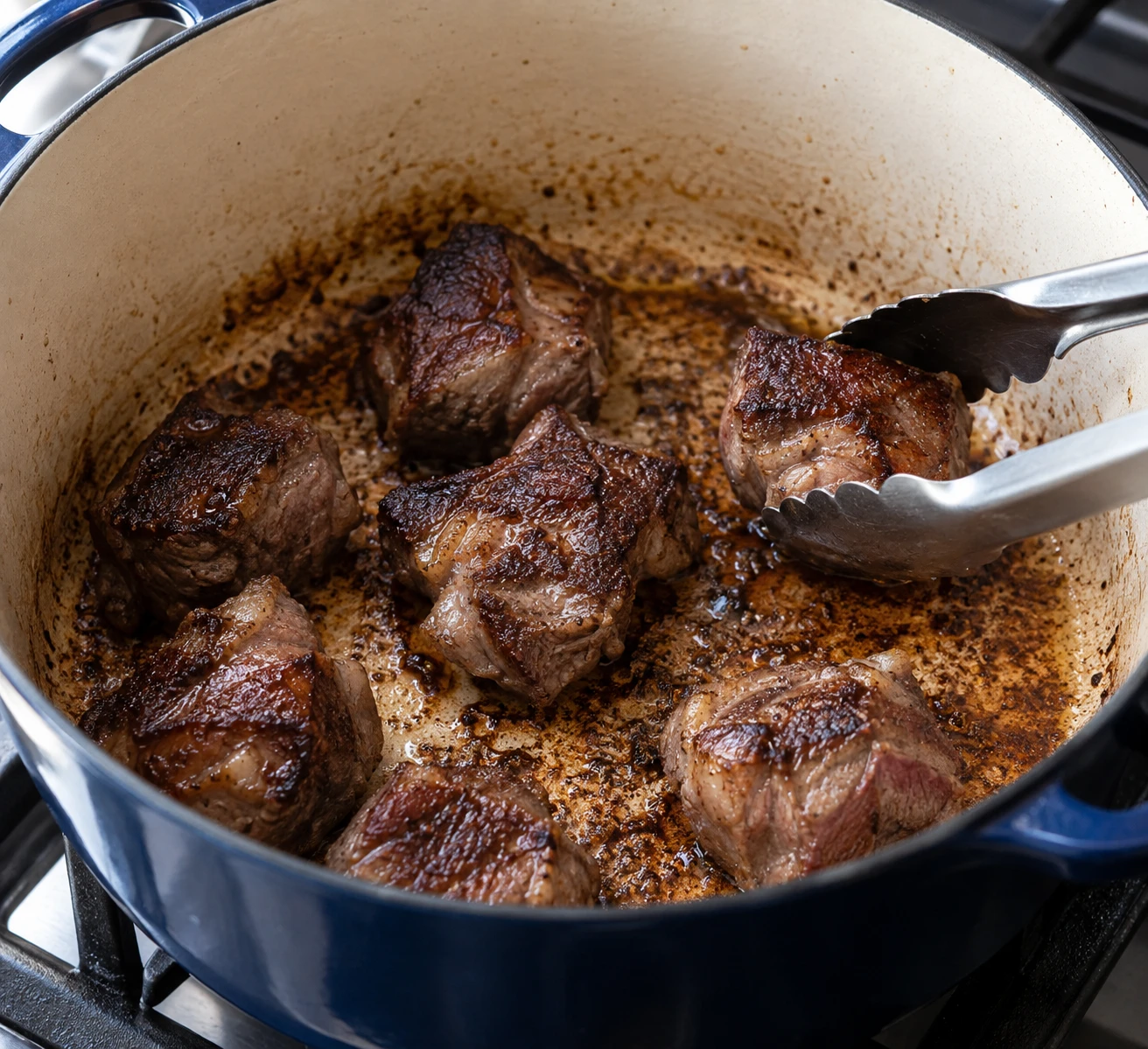
Dry lamb and an uncrowded pot are the foundation of the sauce. Work in batches and wait for a dark crust before turning each piece; those browned surfaces and the fond left behind provide savoriness that a pale sear cannot replace.
Build sweetness underneath
Finely diced onion, carrot, and celery soften into the browned fond before the tomato paste goes in. Cook the paste until brick red and slightly sticky, concentrating its flavor before the wine loosens everything from the bottom of the pot.
Keep the braise gentle
The liquid should barely simmer during the covered braise. If it bubbles aggressively, lower the heat; steady low heat tenderizes the shoulder while keeping the sauce from reducing before the meat is ready to shred.
Let the pasta finish in the sauce
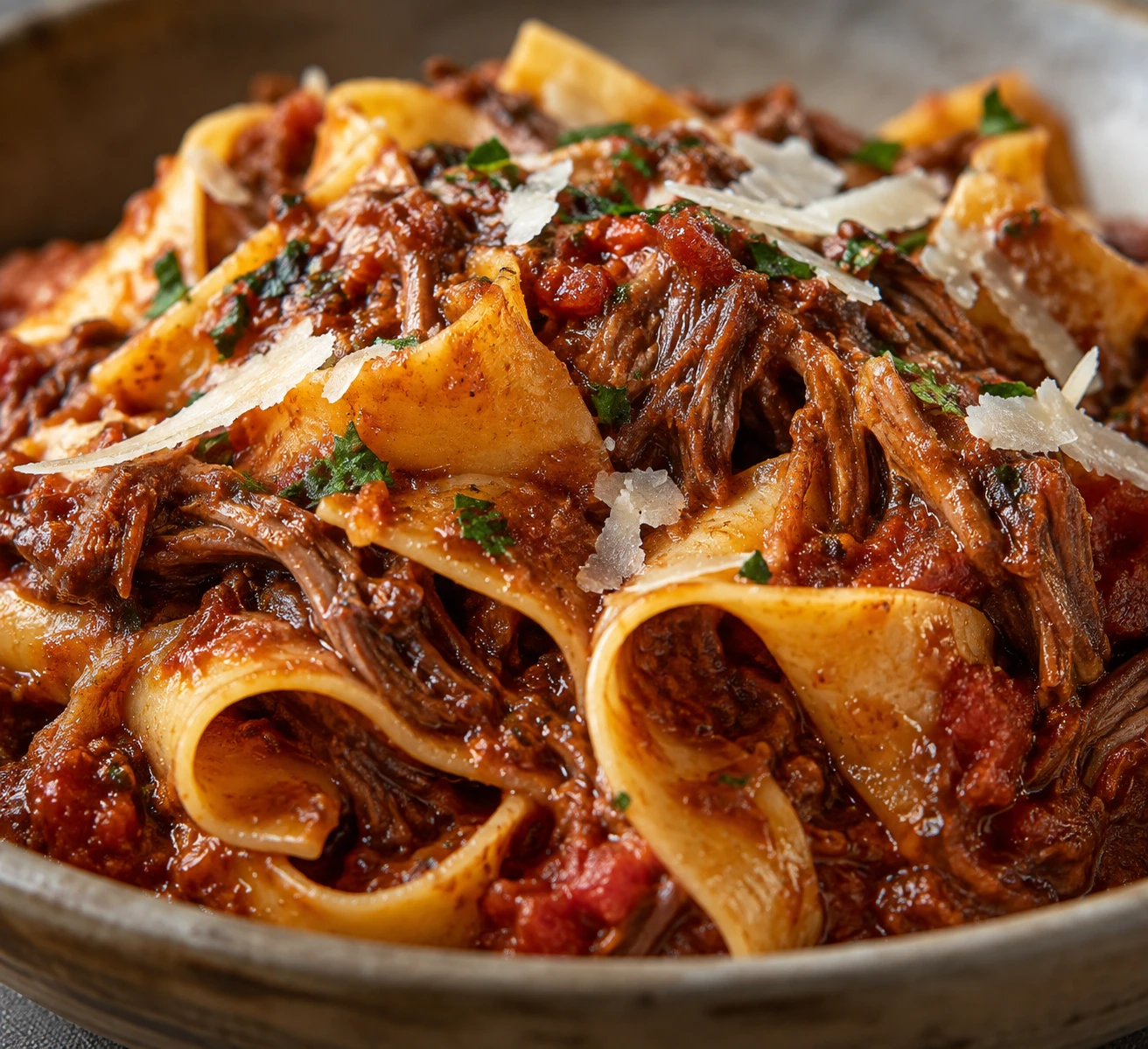
Drain the pappardelle while it still has a firm core, then toss it directly with the ragu and reserved pasta water. The last few minutes in the pot let the ribbons absorb flavor while Pecorino added off heat turns the sauce glossy and cohesive.
Make the ragu ahead
The sauce can be cooled and refrigerated for up to three days, and its flavor deepens as it rests. For longer storage, freeze the ragu without pasta for up to three months, thaw it overnight, and reheat gently before boiling fresh pappardelle.
Slow-Braised Lamb Ragu with Pappardelle
Ingredients
- • 2 1/2 lb boneless lamb shoulder, cut into 2-inch pieces
- • 2 tsp kosher salt, divided
- • 1 tsp freshly ground black pepper
- • 2 tbsp extra-virgin olive oil
- • 1 large yellow onion, finely diced
- • 2 medium carrots, finely diced
- • 2 celery stalks, finely diced
- • 4 garlic cloves, minced
- • 3 tbsp tomato paste
- •
- • 1 can (28 oz) crushed tomatoes
- • 2 cups low-sodium beef stock
- • 2 fresh rosemary sprigs
- • 1 dried bay leaf
- • 1 lb dried pappardelle
- • 3/4 cup finely grated Pecorino Romano, divided
- • 1/4 cup chopped fresh flat-leaf parsley
Method
Season the lamb
Pat the lamb dry, season it all over with 1 1/2 tsp salt and the black pepper, and let it stand while the pot heats.
Look for: The lamb surface is dry and evenly speckled with seasoning.
Brown the lamb
Heat the olive oil in a large Dutch oven over medium-high heat and brown the lamb in 2 or 3 uncrowded batches, turning until deeply colored; transfer each batch to a plate.
Look for: Each piece has a dark brown crust on at least two sides.
Cook the soffritto
Reduce the heat to medium, add the onion, carrots, celery, and remaining 1/2 tsp salt, and cook while scraping the pot until the vegetables soften and begin to bronze.
Look for: The vegetables are soft and the onion edges are light golden.
Toast the aromatics
Stir in the garlic and tomato paste and cook until the garlic is fragrant and the paste darkens to brick red and begins sticking to the pot.
Look for: The tomato paste is brick red and leaves a light film on the pot.
Deglaze the pot
Pour in the red wine and scrape up the browned bits, then simmer until reduced by about half. For the alcohol-free option, add 1 cup additional beef stock and 1 tbsp balsamic vinegar, scraping and reducing them the same way.
Look for: The liquid is reduced by half and a spoon dragged through briefly exposes the pot.
Braise until tender
Return the lamb and its juices to the pot, add the crushed tomatoes, 2 cups beef stock, rosemary, and bay leaf, and bring to a simmer; cover and cook over low heat until the lamb pulls apart easily.
Look for: A fork slides into the lamb without resistance and the meat separates easily.
Shred and reduce
Discard the rosemary stems and bay leaf, shred the lamb into bite-size strands with two forks, and simmer uncovered over medium-low heat until the sauce is thick enough to cling to the meat.
Look for: The sauce coats the shredded lamb without pooling thinly around it.
Cook the pappardelle
Bring a large pot of water to a boil, cook the pappardelle until just shy of al dente, and reserve 1 1/2 cups pasta water before draining.
Look for: The pasta is flexible but retains a firm core when tasted.
Toss pasta and sauce
Add the drained pappardelle to the ragu with 3/4 cup reserved pasta water and toss over medium-low heat, adding more water as needed, until every ribbon is glossy and coated.
Look for: The sauce clings evenly to the pasta with no watery liquid at the bottom.
Finish with Pecorino
Remove the pot from the heat, toss in 1/2 cup Pecorino and the parsley, then divide among warm bowls and finish with the remaining 1/4 cup Pecorino.
Look for: The cheese melts into the sauce and the pasta looks glossy rather than dry.