" fill="%23faf1da" stroke-width="1.8"/>%0A <ellipse cx="64.5" cy="50" rx="43" ry="12" transform="rotate(4 64.5 50)" stroke="%23938466"/>%0A <path d="m26 44 1 10m3-12 1 14m3-14 1 15m3-14 1 15m4-14 1 14m4-13 1 14m39-10-1 10m5-9-1 8m5-7-1 5" stroke="%23b2a181" stroke-width=".7"/>%0A <path d="M55 60c3-10 12-14 23-10l47-44c7-6 15-6 15-2 0 5-9 11-14 14L82 60c-8 4-21 4-27 0Z" fill="%23bc8c48" stroke-width="1.6"/>%0A <path d="M61 59c3-5 9-8 15-5l-4 7m8-8 49-45 6-4M84 52l45-41" stroke="%2376562e" stroke-width="1"/>%0A <path d="M20 53c18 14 69 19 90 2" stroke="%23514431" stroke-width="2"/>%0A <path d="M27 59c22 11 59 14 78 2" stroke="%23fff9e9" stroke-width="2"/>%0A <path d="m48 87 1 1m7 8 1 1m6-12 1 1m6 12 1 1m6-9 1 1m-24 9 1 1m19 4 1-1m10-16 1 1" stroke="%23aa9b7c"/>%0A </g>%0A</svg>%0A)
Spaghetti Bolognese
This weeknight-friendly Bolognese builds a deep, silky beef ragù through patient browning, a modest wine reduction, and a milk-softened tomato simmer.
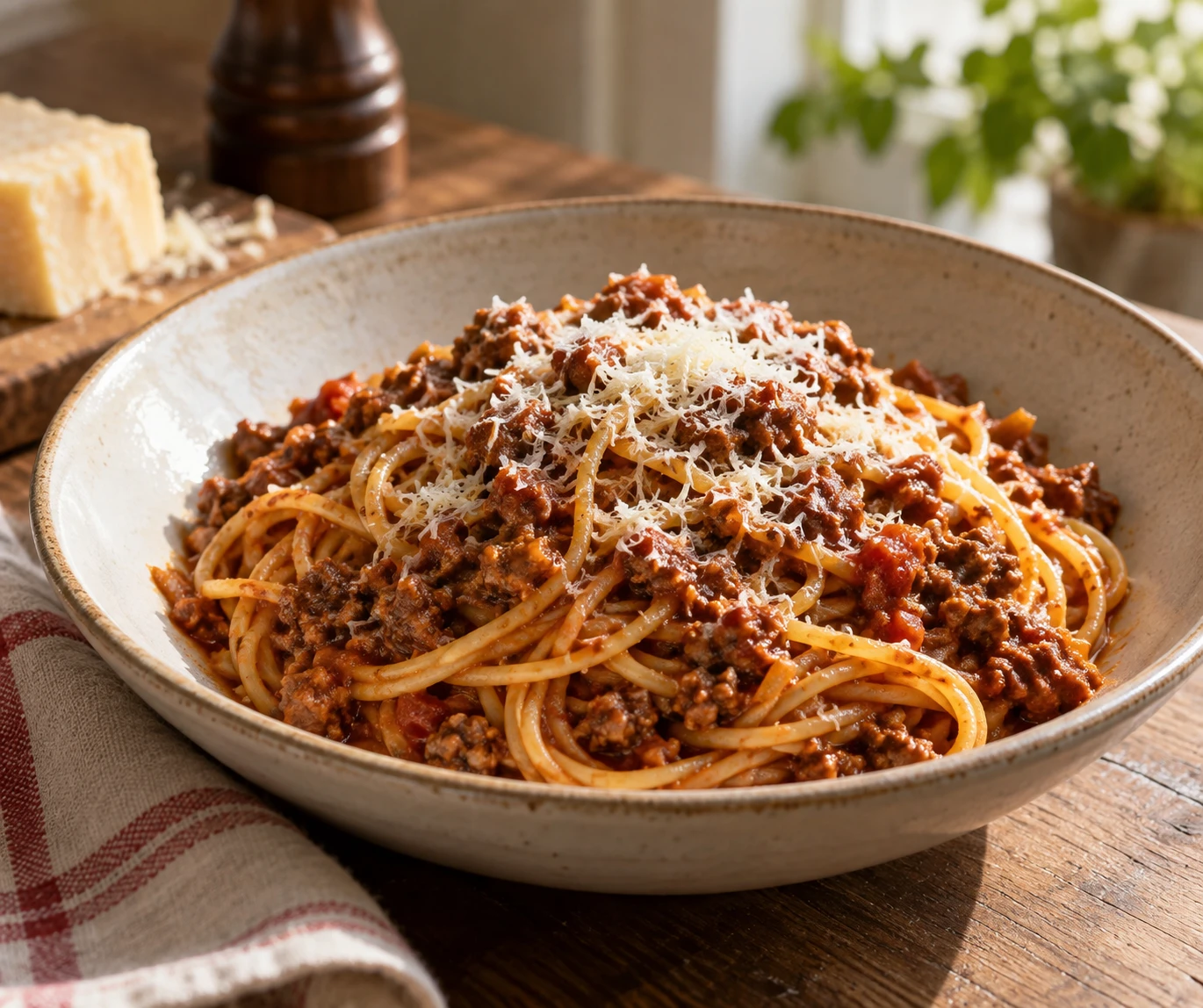
A good home-style Bolognese is less about a long ingredient list than the order in which a few familiar ingredients meet the pot. Beef develops savory depth first, then the finely cut vegetables, tomato paste, and wine turn those browned bits into the backbone of the ragù.
Milk softens the tomatoes without making the sauce creamy, while a restrained simmer concentrates everything into a sauce that actually coats pasta. Finish the spaghetti in the pot so starch, Parmesan, and ragù become one glossy layer.
Small cuts make a unified sauce
Finely diced onion, carrot, and celery are the quiet structure of the ragù. Keeping their pieces similar in size lets them soften together and nearly disappear into the finished sauce, where they bring sweetness and body rather than a chunky texture.
Wait for the brown crust
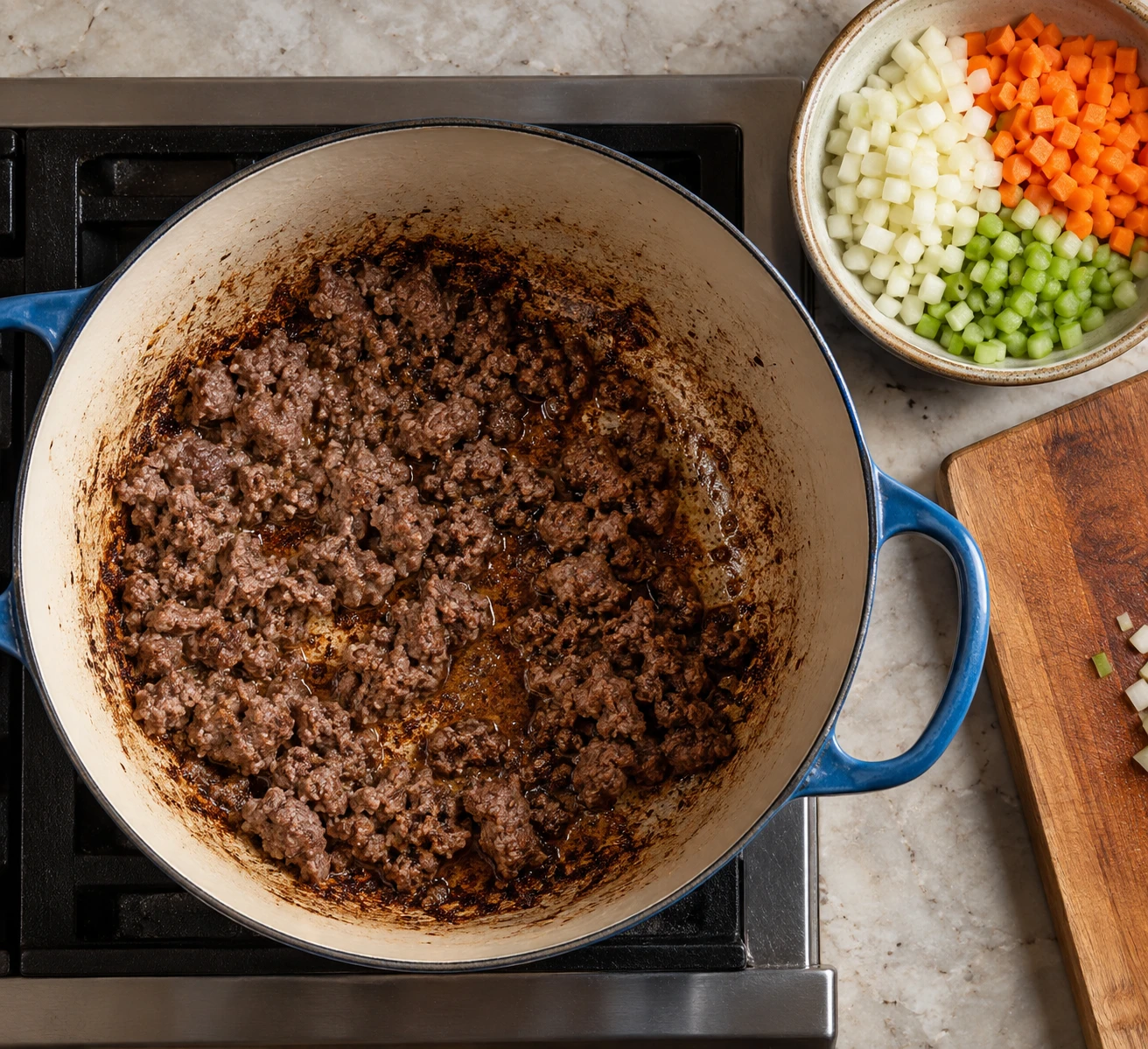
Crowding or constantly stirring ground beef makes it release water and steam. Use a wide pot, let the first side sit against the hot surface, and keep cooking if liquid gathers; the meat is ready when dark fond appears on the pot and the crumbles have browned edges.
Milk rounds the tomatoes
The milk goes into the pot with the tomatoes, where gentle heat integrates it into the ragù. Its job is to round the acidity and support the meat, not to make a pale or dairy-heavy sauce; taste near the end before deciding whether a small extra splash is useful.
Sauce the noodles in the pot
Stop boiling the spaghetti while it still has a firm center, then let it finish in the ragù. Reserved pasta water loosens the sauce just enough for it to cling, and Parmesan adds a final savory body that a plated spoonful of sauce alone cannot provide.
Spaghetti Bolognese
Ingredients
- • 2 tbsp extra-virgin olive oil
- • 1 1/2 lb ground beef
- • 1 large yellow onion, finely diced
- • 2 medium carrots, finely diced
- • 2 celery ribs, finely diced
- • 4 garlic cloves, minced
- • 3 tbsp tomato paste
- • 1/2 cup dry red wine
- • 1 (28 oz) can crushed tomatoes
- • 1 cup whole milk
- • kosher salt
- • 1 lb spaghetti
- • 3/4 cup finely grated Parmesan
Method
Prepare the soffritto
Finely dice the onion, carrots, and celery into evenly small pieces, then mince the garlic so the vegetables will soften at the same rate.
Look for: The onion, carrots, and celery are cut to similarly small pieces.
Brown the beef
Heat the olive oil in a wide Dutch oven over medium-high heat, add the ground beef in a single loose layer, and leave it untouched for 3 minutes before breaking it into crumbles and browning deeply.
Look for: The beef has dark brown spots and the pot bottom has browned fond; if liquid collects, keep cooking until it evaporates rather than stirring constantly.
Soften the vegetables
Lower the heat to medium, add the onion, carrots, celery, minced garlic, and a generous pinch of salt, and cook while scraping the fond until the vegetables are soft and glossy.
Look for: The vegetables have softened without browning hard, and the garlic smells fragrant rather than sharp.
Toast and deglaze
Stir in the tomato paste and cook for 2 minutes until it darkens to brick red, then pour in the red wine and scrape the pot until the liquid is nearly evaporated.
Look for: The tomato paste looks darker and the wine no longer pools in the bottom of the pot.
Build the ragù
Add the crushed tomatoes, milk, 1 cup water, and 1 tsp salt, then bring the sauce just to a gentle simmer while stirring to combine the meat and vegetables evenly.
Look for: Small bubbles rise lazily across the surface and the sauce is evenly mixed.
Simmer until rich
Partially cover the pot and simmer the ragù over low heat for 40 minutes, stirring every 10 minutes, until it is thick, glossy, and rich enough to cling to a spoon.
Look for: A spoon drawn through the sauce leaves a brief trail, and no watery liquid separates at the edges.
Balance the sauce
Taste the ragù and add salt as needed; if the tomatoes still taste sharp, simmer uncovered for 5 minutes more or stir in a small splash of milk to round the acidity.
Look for: The sauce tastes savory and rounded, with tomato brightness but no harsh acidic edge.
Boil the spaghetti
Cook the spaghetti in a large pot of well-salted boiling water until 2 minutes shy of al dente, reserving 1 cup pasta water before draining.
Look for: The spaghetti bends but still has a firm white core when bitten.
Finish and serve
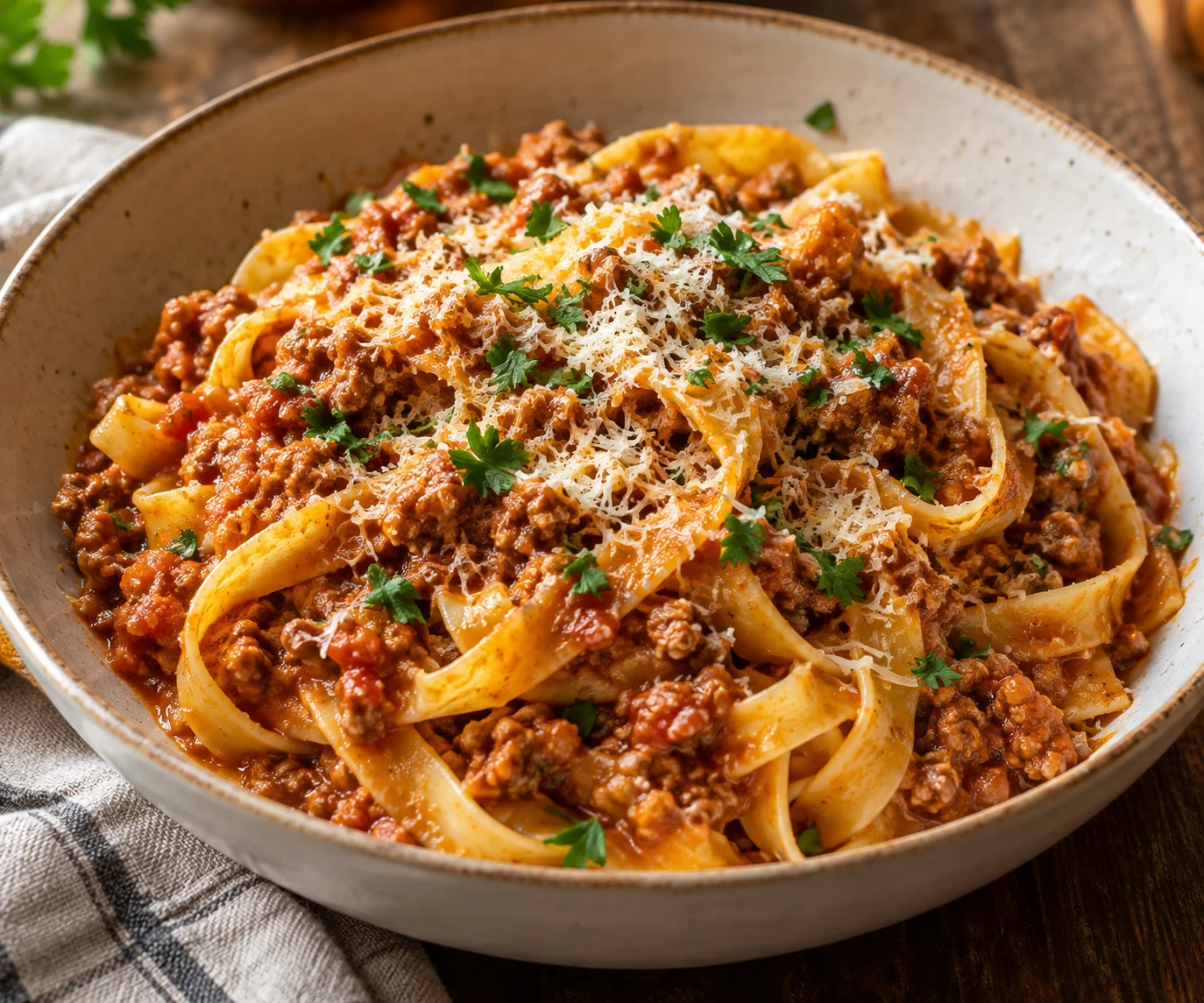
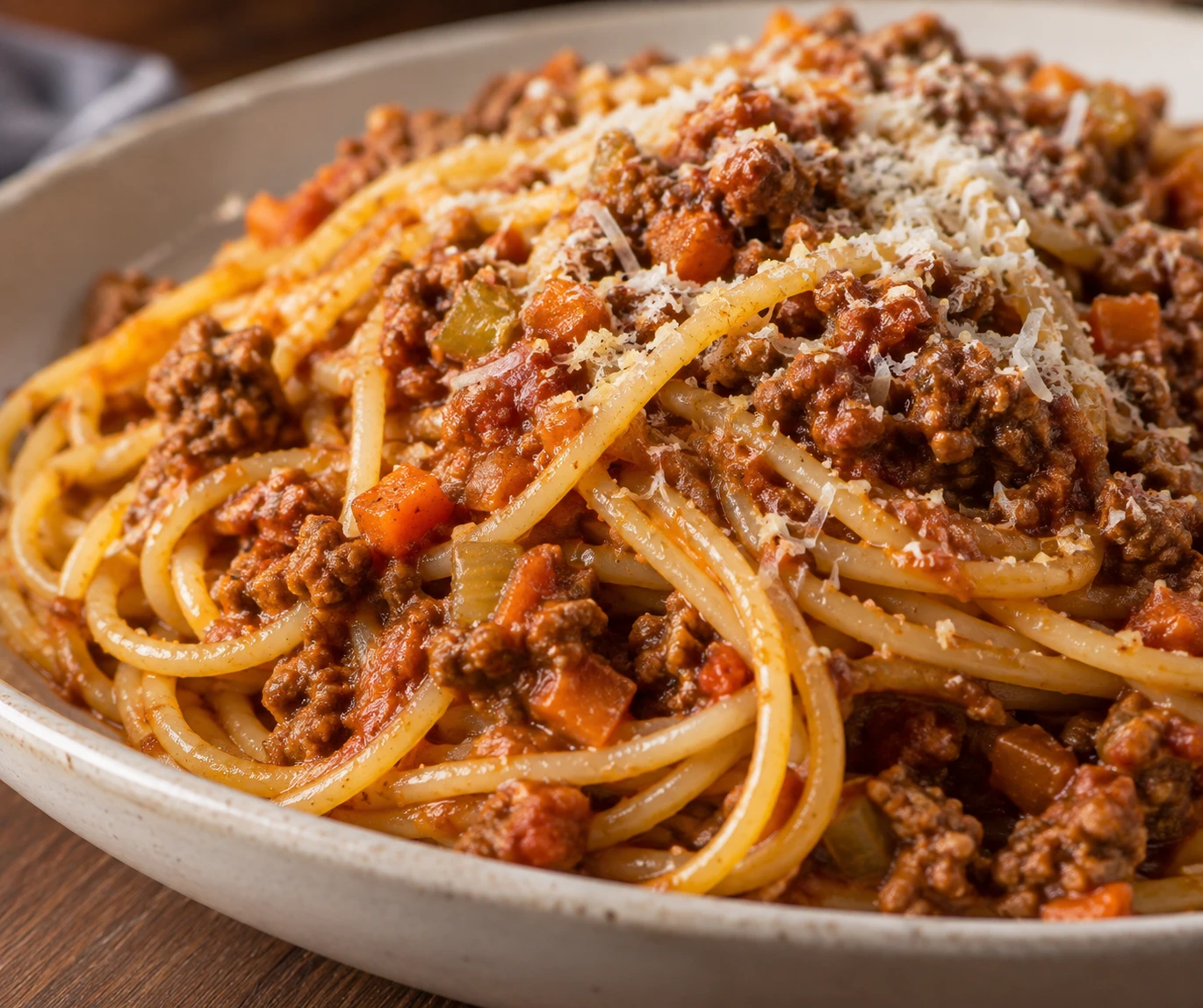
Add the drained spaghetti and 1/2 cup Parmesan to the ragù, toss over low heat with splashes of pasta water until every strand is coated, then serve with the remaining Parmesan.
Look for: The sauce clings in a glossy layer to the spaghetti instead of pooling beneath it.