" fill="%23faf1da" stroke-width="1.8"/>%0A <ellipse cx="64.5" cy="50" rx="43" ry="12" transform="rotate(4 64.5 50)" stroke="%23938466"/>%0A <path d="m26 44 1 10m3-12 1 14m3-14 1 15m3-14 1 15m4-14 1 14m4-13 1 14m39-10-1 10m5-9-1 8m5-7-1 5" stroke="%23b2a181" stroke-width=".7"/>%0A <path d="M55 60c3-10 12-14 23-10l47-44c7-6 15-6 15-2 0 5-9 11-14 14L82 60c-8 4-21 4-27 0Z" fill="%23bc8c48" stroke-width="1.6"/>%0A <path d="M61 59c3-5 9-8 15-5l-4 7m8-8 49-45 6-4M84 52l45-41" stroke="%2376562e" stroke-width="1"/>%0A <path d="M20 53c18 14 69 19 90 2" stroke="%23514431" stroke-width="2"/>%0A <path d="M27 59c22 11 59 14 78 2" stroke="%23fff9e9" stroke-width="2"/>%0A <path d="m48 87 1 1m7 8 1 1m6-12 1 1m6 12 1 1m6-9 1 1m-24 9 1 1m19 4 1-1m10-16 1 1" stroke="%23aa9b7c"/>%0A </g>%0A</svg>%0A)
Lemon-Garlic Shrimp Scampi
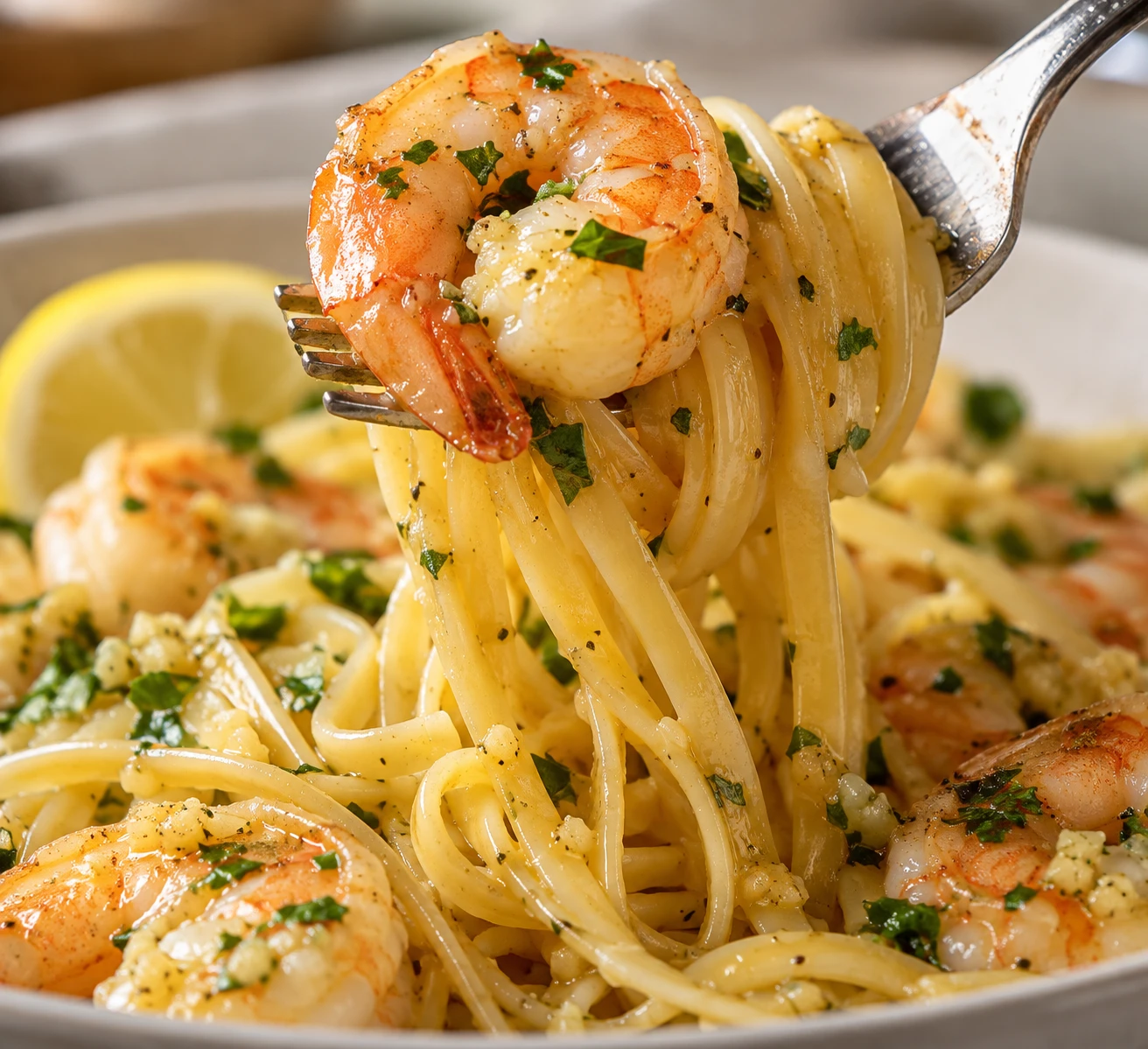
Garlic, lemon, butter, and a quick wine reduction make this classic, cream-free shrimp scampi glossy enough to cling to every strand of linguine.
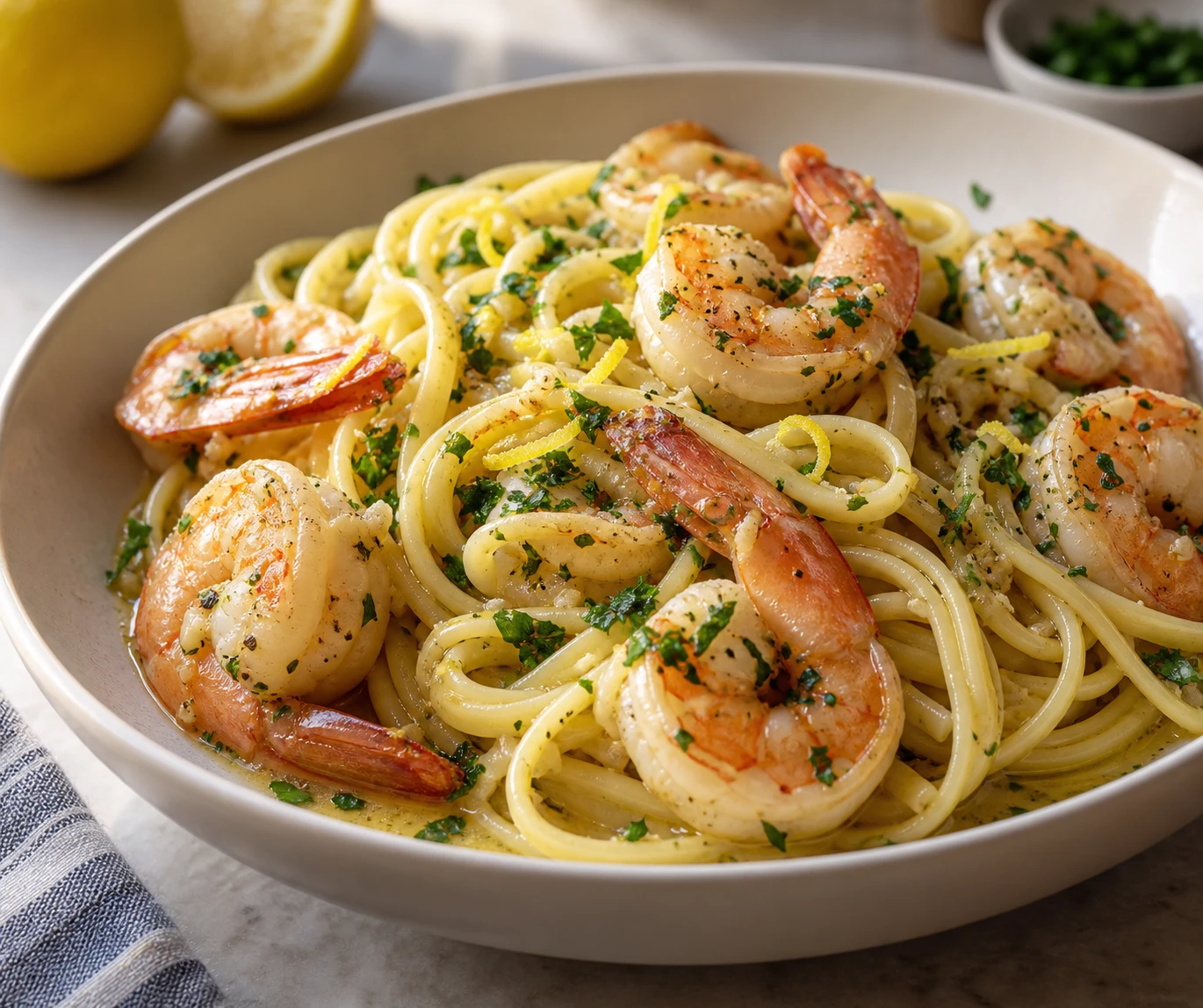
Shrimp scampi succeeds on timing more than complication: the shrimp need a brief sear, while the pasta needs to reach the pan still eager to absorb sauce. The result is bright, garlicky, and silky without a drop of cream.
A little reserved pasta water is the quiet ingredient that binds butter, olive oil, and lemon into a sauce rather than a puddle. Have every ingredient ready before the skillet gets hot, since the cooking moves quickly.
Start with dry shrimp
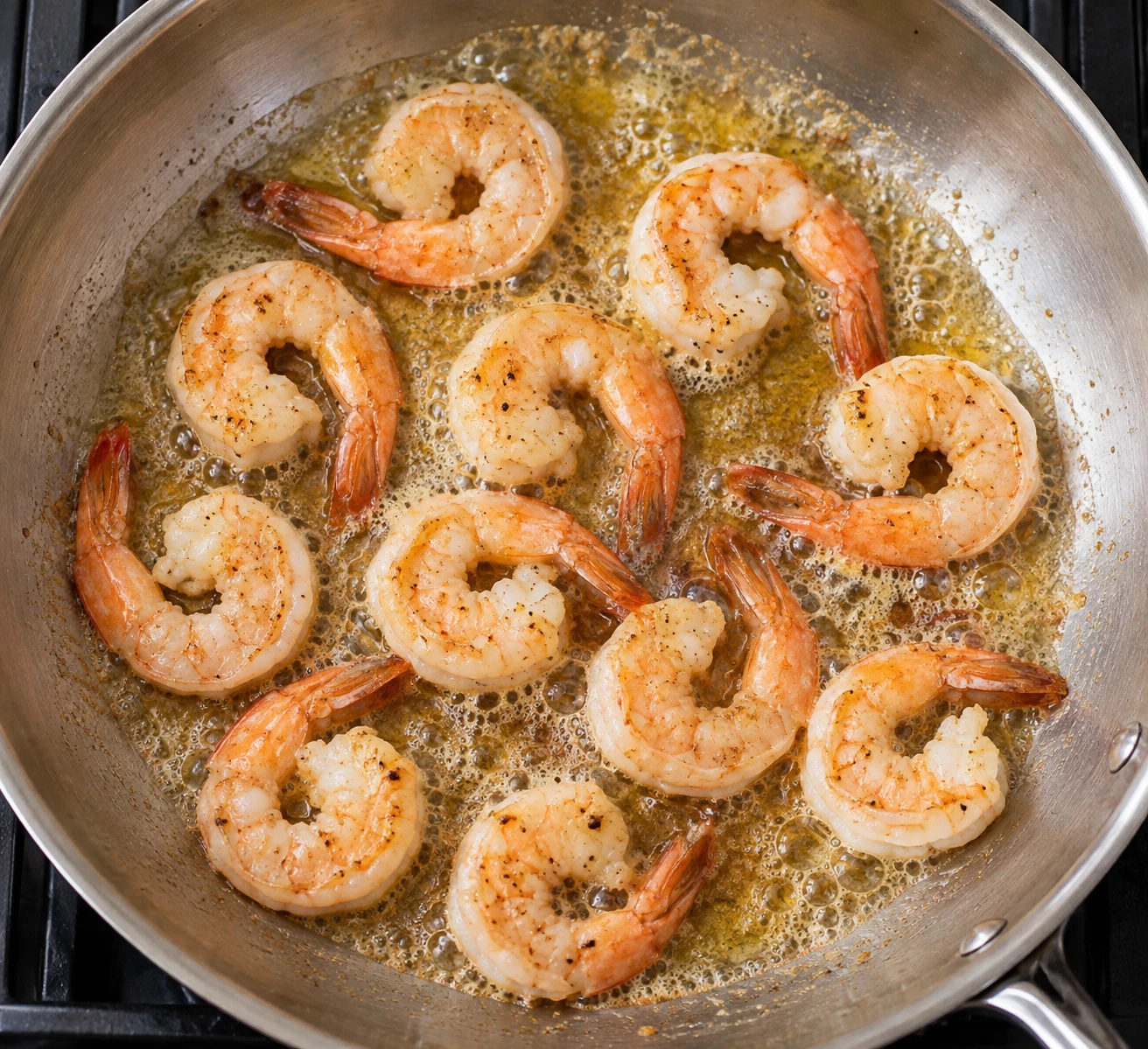
Patting shrimp dry is the simplest way to earn a real sear. Cook them only until the flesh turns opaque and the curl is loose; a tight O shape is the signal that they have gone too far.
Save the starchy water
Drain the linguine early and keep its cooking water close. The starch helps the reduced pan sauce cling to noodles, and a splash restores the glossy texture if the pasta drinks up too much liquid.
Build gloss without cream
After wine or stock reduces, butter and pasta water meet the warm liquid to form a light emulsion. Keep the heat gentle while whisking so the butter stays shiny and the lemon remains fresh rather than harsh.
Choose the right substitute
Dry white wine gives the sauce lift, but unsalted seafood stock makes a fine nonalcoholic substitute. Taste before adding the final salt, especially if using stock, and adjust with another squeeze of lemon if the sauce needs brightness.
Lemon-Garlic Shrimp Scampi
Ingredients
- • 12 oz linguine
- • 1 1/2 lb large shrimp, peeled and deveined
- • 1 1/2 tsp kosher salt, divided
- • 3 tbsp extra-virgin olive oil
- • 6 tbsp unsalted butter, divided
- • 6 garlic cloves, thinly sliced
- • 1/2 tsp red-pepper flakes
- •
- • 1 lemon, zested and juiced
- • 1/3 cup chopped fresh parsley
Method
Boil the pasta water
Bring a large pot of well-salted water to a rolling boil while you prepare the shrimp, reserving a mug for pasta water before draining. Use white wine by default; use seafood stock for a nonalcoholic version.
Look for: Large bubbles break steadily across the entire surface.
Season the shrimp
Pat the peeled and deveined shrimp very dry and season with 1 tsp salt; dry shrimp sear quickly instead of releasing water into the skillet.
Look for: The shrimp surfaces look matte and the seasoning is evenly distributed.
Cook the linguine
Cook the linguine until two minutes shy of package al dente timing, then reserve 1 cup pasta water and drain the pasta without rinsing.
Look for: The noodles bend easily but still have a firm pale center when bitten.
Sear the shrimp
Heat the olive oil and 2 tbsp butter in a large skillet over medium-high until the butter foams, then cook shrimp in one layer for 60 to 90 seconds per side until just opaque; transfer them to a plate immediately.
Look for: The shrimp are pink, curled loosely into a C, and opaque at the thickest point, not tightly coiled.
Bloom the aromatics
Reduce to medium-low and add the six sliced garlic cloves and red-pepper flakes to the skillet, stirring for about 30 seconds until fragrant but not browned.
Look for: The garlic smells sweet and fragrant while its edges remain pale.
Reduce the pan sauce
Pour in the wine, or unsalted seafood stock for a nonalcoholic version, and scrape up the browned bits; simmer until reduced by about half.
Look for: The liquid smells bright and leaves a brief track when a spoon crosses the pan.
Emulsify the sauce
Whisk in the remaining 4 tbsp butter, the zest and juice from the zested and juiced lemon, and 1/2 cup pasta water until the sauce turns glossy and lightly coats the skillet.
Look for: The sauce looks shiny and unified rather than oily or broken.
Toss and finish
Add linguine, shrimp, parsley, and the remaining 1/2 tsp salt, tossing for 1 to 2 minutes until the pasta is coated; add more pasta water a splash at a time if needed, then serve at once.
Look for: Glossy sauce clings to the noodles and the shrimp are warm without becoming firm or rubbery.