" fill="%23faf1da" stroke-width="1.8"/>%0A <ellipse cx="64.5" cy="50" rx="43" ry="12" transform="rotate(4 64.5 50)" stroke="%23938466"/>%0A <path d="m26 44 1 10m3-12 1 14m3-14 1 15m3-14 1 15m4-14 1 14m4-13 1 14m39-10-1 10m5-9-1 8m5-7-1 5" stroke="%23b2a181" stroke-width=".7"/>%0A <path d="M55 60c3-10 12-14 23-10l47-44c7-6 15-6 15-2 0 5-9 11-14 14L82 60c-8 4-21 4-27 0Z" fill="%23bc8c48" stroke-width="1.6"/>%0A <path d="M61 59c3-5 9-8 15-5l-4 7m8-8 49-45 6-4M84 52l45-41" stroke="%2376562e" stroke-width="1"/>%0A <path d="M20 53c18 14 69 19 90 2" stroke="%23514431" stroke-width="2"/>%0A <path d="M27 59c22 11 59 14 78 2" stroke="%23fff9e9" stroke-width="2"/>%0A <path d="m48 87 1 1m7 8 1 1m6-12 1 1m6 12 1 1m6-9 1 1m-24 9 1 1m19 4 1-1m10-16 1 1" stroke="%23aa9b7c"/>%0A </g>%0A</svg>%0A)
Corned Beef and Sauerkraut Reubens
Corned beef, Swiss, well-drained sauerkraut, and dressing meet between crisp griddled rye in a hot, tangy sandwich built for a skillet.
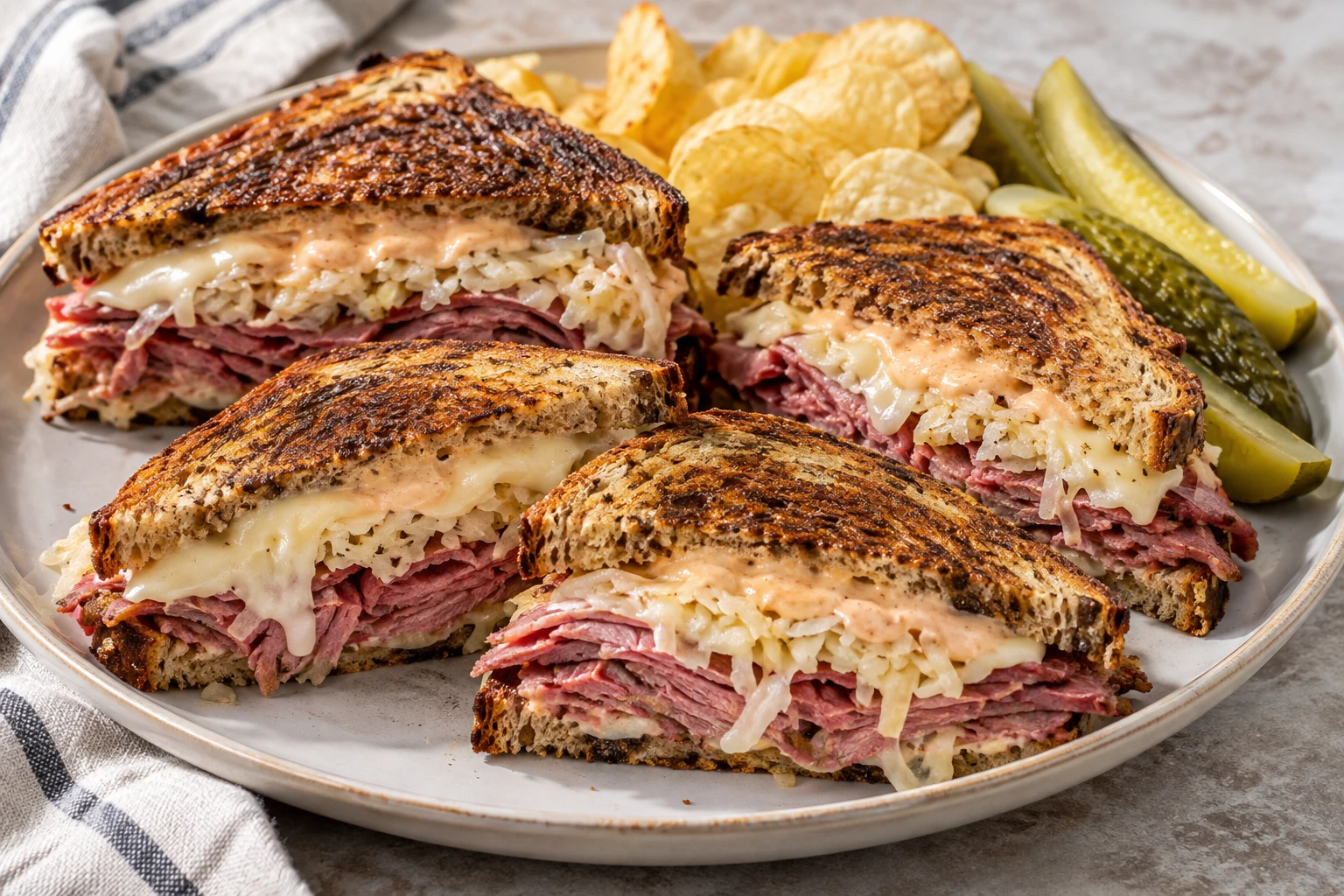
A Reuben works because its rich meat and cheese meet a sharp, briny filling inside bread that stays crisp. This method keeps the sauerkraut flavorful while controlling moisture and heat.
Balance rich and tangy
Corned beef and Swiss make a savory, substantial center, while sauerkraut and dressing provide the tang that keeps each bite lively. Rye brings its own toasted flavor and a firm surface for griddling.
Dry the sauerkraut well
Sauerkraut carries brine that can quickly soften bread when it is trapped inside a hot sandwich. Pressing and blotting remove loose liquid while leaving the kraut moist and tart.
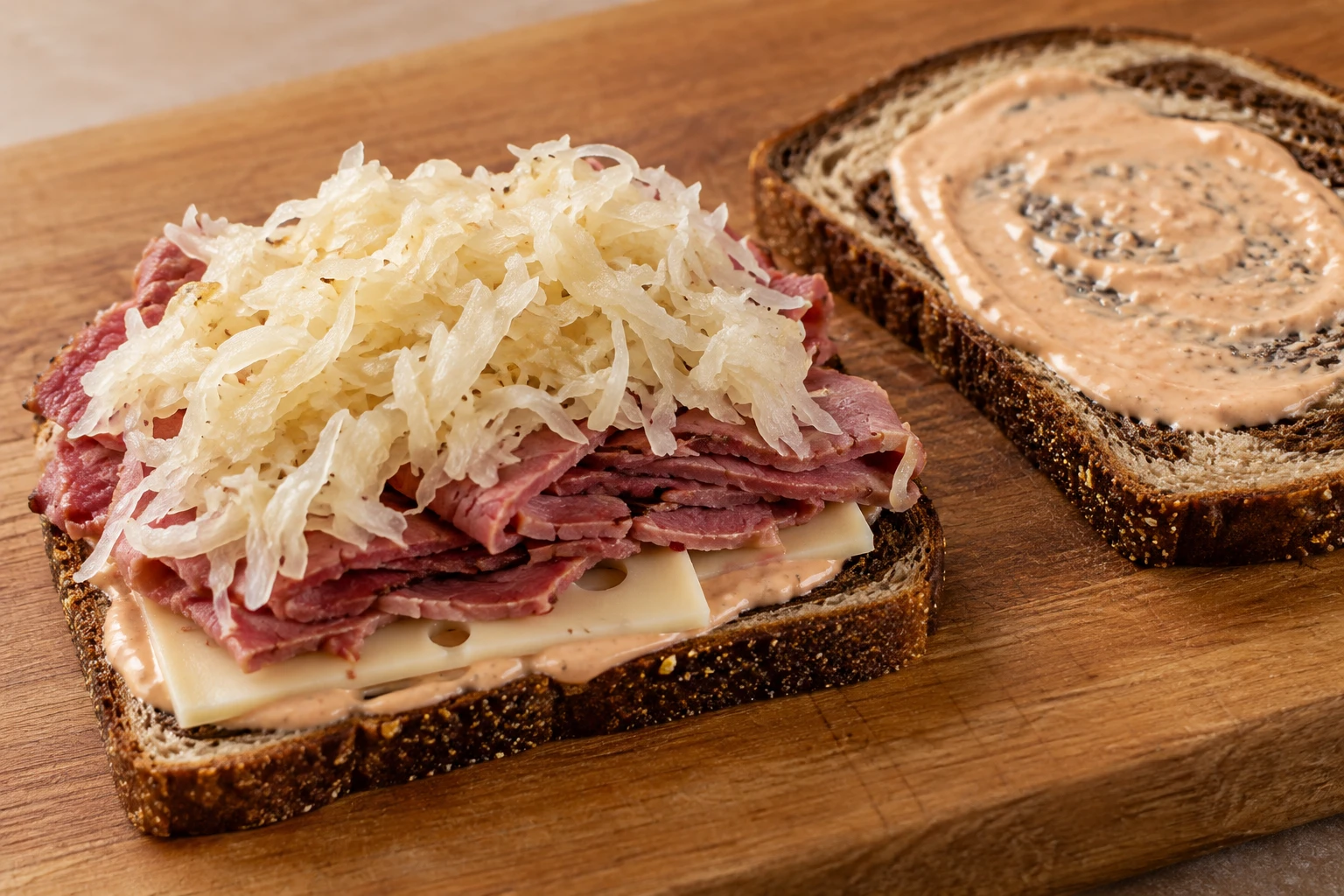
Let the rye set the pace
Medium heat gives the buttered bread time to turn golden while the cheese softens against the warm meat. If the surface darkens too quickly, lower the heat before cooking the next side.
Cover only briefly
A short covered interval helps the Swiss melt after the sandwich is flipped, but leaving the lid on can soften the crust. Uncover to finish crisping the second face and check that the bread stays golden.
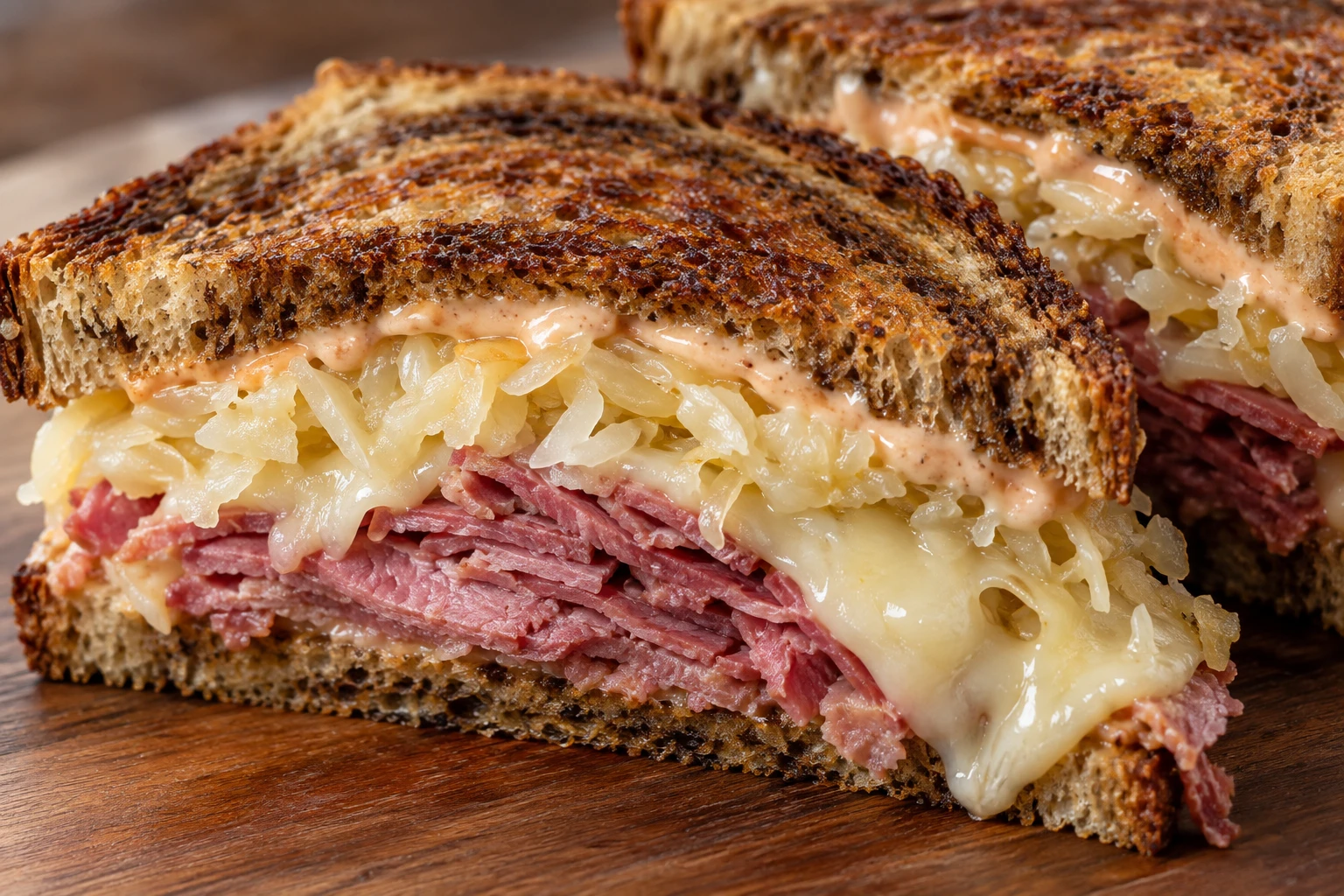
Serve while the rye is crisp
Let the finished sandwiches settle briefly before cutting so the cheese and filling remain tucked between the halves. A pickle spear and potato chips complete the hot sandwich with a cool, briny crunch.
Corned Beef and Sauerkraut Reubens
Ingredients
- • 12 oz thinly sliced corned beef
- • 8 slices rye bread
- • 8 slices Swiss cheese
- • 1 1/2 cups sauerkraut
- • 4 tbsp unsalted butter, softened
- •
- • 4 dill pickle spears
- • 4 oz potato chips
Method
Warm the skillet
Set a large skillet or flat griddle over medium heat for 3 minutes while you prepare the filling; a moderate, even surface browns the rye without scorching it.
Look for: The empty cooking surface is evenly warm and gives off no smoke.
Dry the sauerkraut
Drain the sauerkraut in a fine sieve, press it firmly with the back of a spoon, then blot it on paper towels; measure 1 1/2 cups only after excess brine is removed.
Look for: The kraut is still moist and tangy, but no liquid drips when a small handful is pressed.
Assemble the sandwiches
Spread 1/2 tbsp Russian dressing on the inside of each rye slice; if using the Thousand Island alternative, use it instead at the same amount. Layer one Swiss slice, 3 oz corned beef, about 1/3 cup dry sauerkraut, and a second Swiss slice on four bread slices, then close each sandwich.
Look for: Each sandwich has an even filling layer and the sauerkraut is not visibly wet.
Butter the rye
Spread the softened butter in a thin, even layer over the outside face of all 8 bread slices, reaching the edges so the rye browns uniformly on the skillet.
Look for: Each outer bread face has a light, continuous sheen without thick butter patches.
Brown the first side
Place two sandwiches on the warm skillet and cook uncovered for about 3 minutes, checking early; the first face should turn evenly golden while the cheese starts to soften.
Look for: The rye is golden rather than dark brown, and the lower cheese slice begins to soften.
Melt the cheese gently
Flip the first pair, cover the skillet for 1 minute to help melt the cheese, then uncover and cook until the second face is crisp; repeat with the remaining two sandwiches, lowering the heat if rye darkens before the centers warm.
Look for: Both bread faces are crisp and golden, and the Swiss is melted around the warm corned beef.
Rest and cut
Transfer the sandwiches to a cutting board and let them rest for 2 minutes before cutting each diagonally; the short pause helps the hot filling stay between the rye halves.
Look for: The melted cheese has settled enough that the filling stays in place when cut.
Serve hot
Serve each sandwich hot with a dill pickle spear and a portion of potato chips, while the griddled rye is still crisp.
Look for: The rye crackles lightly at the edges and the pickle brings a sharp, briny contrast.