" fill="%23faf1da" stroke-width="1.8"/>%0A <ellipse cx="64.5" cy="50" rx="43" ry="12" transform="rotate(4 64.5 50)" stroke="%23938466"/>%0A <path d="m26 44 1 10m3-12 1 14m3-14 1 15m3-14 1 15m4-14 1 14m4-13 1 14m39-10-1 10m5-9-1 8m5-7-1 5" stroke="%23b2a181" stroke-width=".7"/>%0A <path d="M55 60c3-10 12-14 23-10l47-44c7-6 15-6 15-2 0 5-9 11-14 14L82 60c-8 4-21 4-27 0Z" fill="%23bc8c48" stroke-width="1.6"/>%0A <path d="M61 59c3-5 9-8 15-5l-4 7m8-8 49-45 6-4M84 52l45-41" stroke="%2376562e" stroke-width="1"/>%0A <path d="M20 53c18 14 69 19 90 2" stroke="%23514431" stroke-width="2"/>%0A <path d="M27 59c22 11 59 14 78 2" stroke="%23fff9e9" stroke-width="2"/>%0A <path d="m48 87 1 1m7 8 1 1m6-12 1 1m6 12 1 1m6-9 1 1m-24 9 1 1m19 4 1-1m10-16 1 1" stroke="%23aa9b7c"/>%0A </g>%0A</svg>%0A)
Korean Bibimbap with Crispy Rice
A skillet-grown rice crust turns this vegetarian Korean-style bibimbap into a bowl of warm, crunchy, saucy contrasts, finished with a runny egg and toasted seaweed.
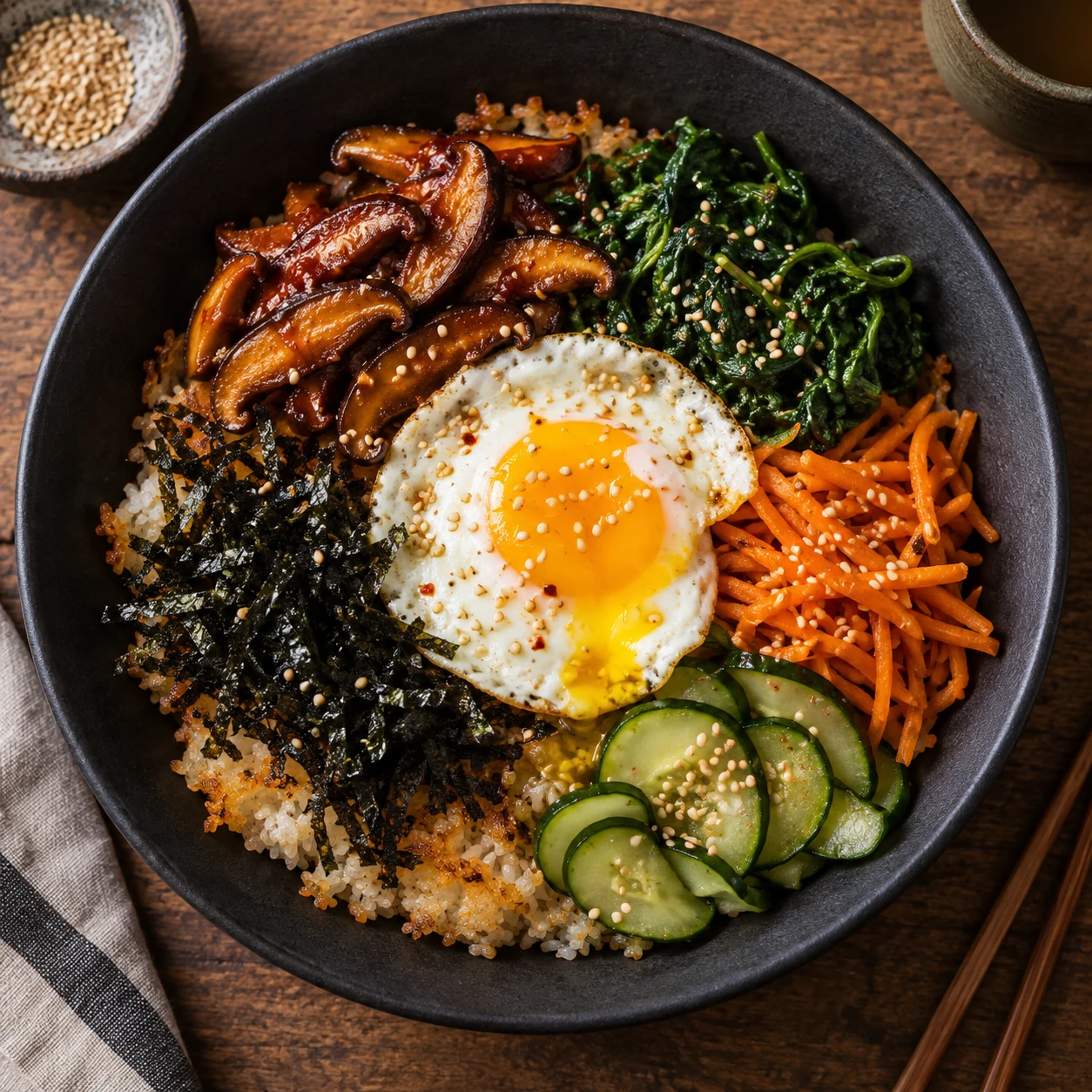
Bibimbap is at its best when the individual components arrive with their own character: earthy glazed mushrooms, tender savory spinach, bright carrots, and cool, sharp cucumber. Here, a thin layer of rice cooks undisturbed in a hot skillet until it develops a golden crust, giving every mixed spoonful a welcome crunch.
Keep the components distinct
Cook the mushrooms first, then move them to a bowl before tending the greens and carrots. Holding each topping separately protects its texture and keeps the finished bowl from becoming one soft, wet pile.
Glaze after browning
Mushrooms need time in a wide pan to give up their moisture and develop browned edges. Add gochujang only after the pan is nearly dry, so it becomes a concentrated glaze instead of a diluted sauce.
Listen for the rice crust
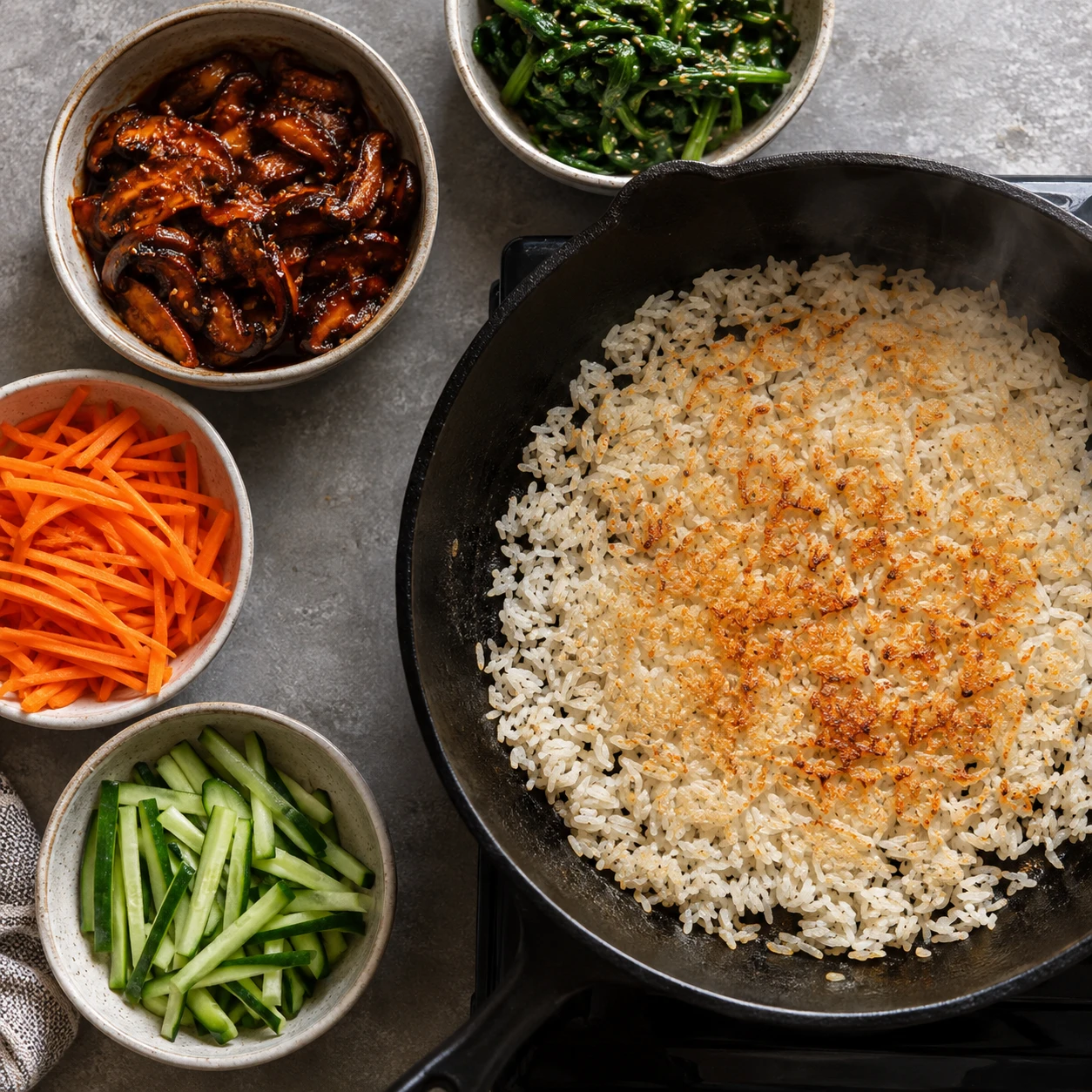
A steady gentle crackle and a nutty aroma are the useful signals here. Keep the heat at medium, resist stirring, and test one edge with a thin spatula; if the rice resists, let it cook longer rather than forcing it loose.
Arrange before you mix
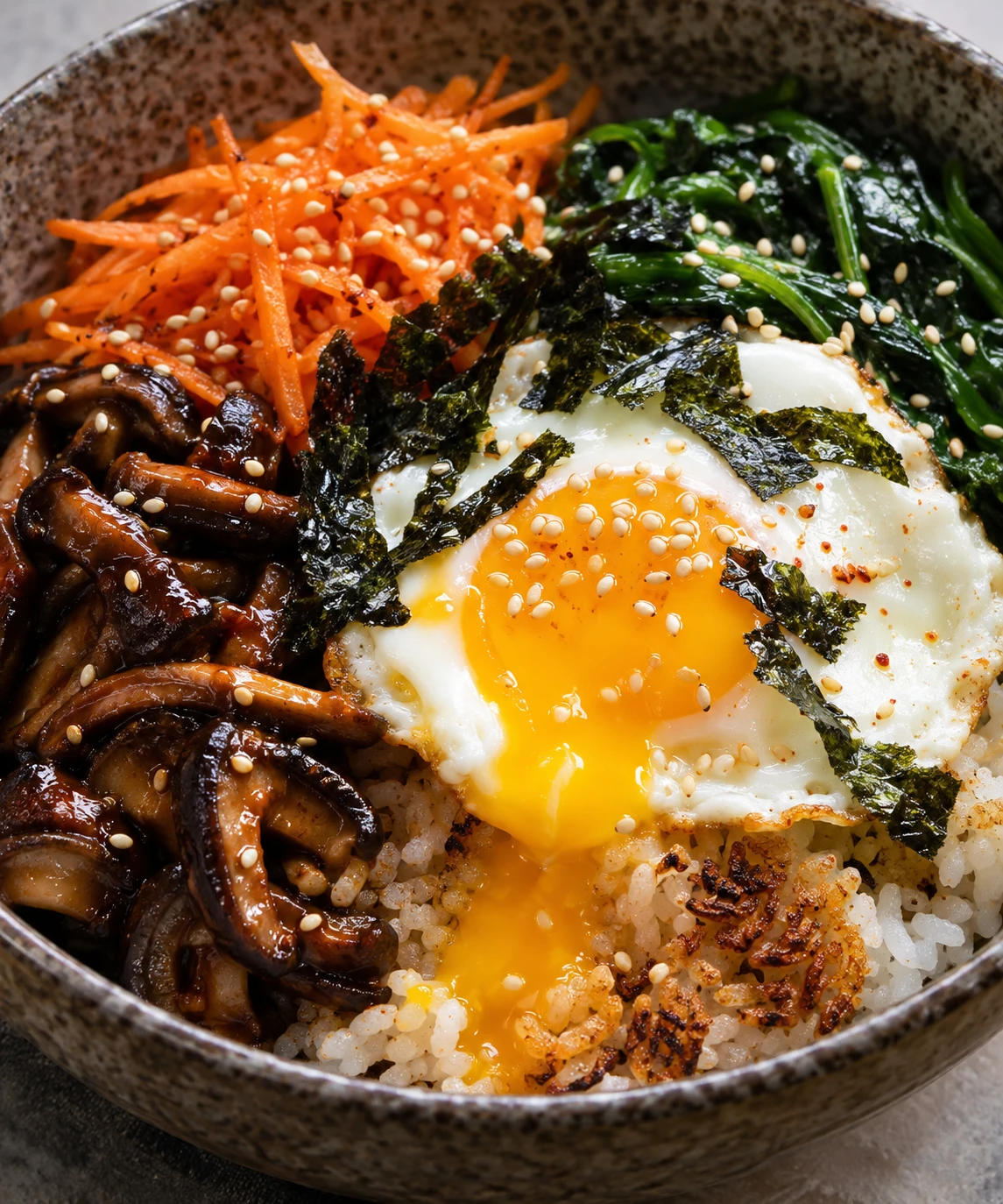
Place the toppings in separate wedges over the crisp rice and crown them with the egg, seaweed, and sesame. The final mixing belongs at the table, where the yolk and gochujang-sesame sauce can coat the rice without erasing the vegetables' color and texture.
Korean Bibimbap with Crispy Rice
Ingredients
- • 4 cups cooked short-grain rice, warm or room temperature
- • 3 tbsp neutral oil, divided
- • 12 oz cremini mushrooms, sliced
- • 3 tbsp gochujang, divided
- • 2 tbsp toasted sesame oil, divided
- • 2 tbsp rice vinegar, divided
- • 5 oz baby spinach
- • 2 medium carrots, cut into thin matchsticks
- • 1 English cucumber, thinly sliced
- • 4 large eggs, toasted sesame seeds, and roasted seaweed sheets
Method
Season the cucumber
Toss the cucumber with 1 tbsp rice vinegar, a pinch of salt, and 1 tsp sugar if desired; set it aside for at least 15 minutes, then drain off any liquid before serving.
Look for: The cucumber is lightly glossy and still crisp, with a small puddle of brine left behind.
Mix the sauce
Stir 2 tbsp gochujang with the remaining 1 tbsp rice vinegar, 1 tbsp toasted sesame oil, 1 tbsp water, and 1 tsp sugar if desired until smooth and spoonable.
Look for: The sauce is brick red, smooth, and falls from the spoon in a slow ribbon.
Cook the mushrooms
Heat 1 tbsp neutral oil in a wide skillet over medium-high heat, spread the mushrooms in one layer, and cook until their moisture evaporates and the edges brown; stir in the remaining 1 tbsp gochujang and cook until glossy, then transfer to a bowl.
Look for: The mushrooms are browned at the edges and coated in a sticky red glaze with no watery liquid in the pan.
Season the vegetables
Wilt the spinach in the empty skillet with a splash of water, squeeze it dry, and toss with 1 tsp sesame oil and a pinch of salt; then briefly saute the carrots in 1 tsp neutral oil until flexible but still bright, seasoning them with a pinch of salt and sesame seeds. Keep each component in a separate bowl.
Look for: The spinach is tender but not wet, and the carrots bend without losing their bright color or crisp center.
Crisp the rice
Wipe out the skillet or use a 10- to 12-inch cast-iron pan, heat 1 tbsp neutral oil over medium heat, and press the rice into one even thin layer. Cook without stirring until the underside is deeply golden and releases in crisp patches; lower the heat if it smells acrid.
Look for: The rice crackles gently, smells nutty rather than burnt, and lifts in golden crusted sections when tested with a thin spatula.
Fry the eggs
Make four shallow wells in the rice or fry the eggs separately in the remaining 1 tsp neutral oil over medium-low heat until the whites are set and the yolks remain runny.
Look for: The whites are opaque to their centers while each yolk still jiggles when the pan is nudged.
Arrange the bibimbap
Divide the crisp rice among four warm shallow bowls, or serve it from the skillet, and arrange mushrooms, spinach, carrots, and drained cucumber in separate wedges. Top each portion with an egg, sesame seeds, torn roasted seaweed, and a spoonful of sauce.
Look for: The toppings remain in distinct colorful sections and the rice crust is exposed around their edges.
Mix at the table
Bring extra gochujang-sesame sauce to the table and invite diners to break the yolk, fold the toppings through the rice, and scrape up crisp pieces from the bowl as they eat.
Look for: The yolk and sauce lightly coat the rice while the vegetables retain separate textures.