" fill="%23faf1da" stroke-width="1.8"/>%0A <ellipse cx="64.5" cy="50" rx="43" ry="12" transform="rotate(4 64.5 50)" stroke="%23938466"/>%0A <path d="m26 44 1 10m3-12 1 14m3-14 1 15m3-14 1 15m4-14 1 14m4-13 1 14m39-10-1 10m5-9-1 8m5-7-1 5" stroke="%23b2a181" stroke-width=".7"/>%0A <path d="M55 60c3-10 12-14 23-10l47-44c7-6 15-6 15-2 0 5-9 11-14 14L82 60c-8 4-21 4-27 0Z" fill="%23bc8c48" stroke-width="1.6"/>%0A <path d="M61 59c3-5 9-8 15-5l-4 7m8-8 49-45 6-4M84 52l45-41" stroke="%2376562e" stroke-width="1"/>%0A <path d="M20 53c18 14 69 19 90 2" stroke="%23514431" stroke-width="2"/>%0A <path d="M27 59c22 11 59 14 78 2" stroke="%23fff9e9" stroke-width="2"/>%0A <path d="m48 87 1 1m7 8 1 1m6-12 1 1m6 12 1 1m6-9 1 1m-24 9 1 1m19 4 1-1m10-16 1 1" stroke="%23aa9b7c"/>%0A </g>%0A</svg>%0A)
Gochujang Bang Bang Chicken
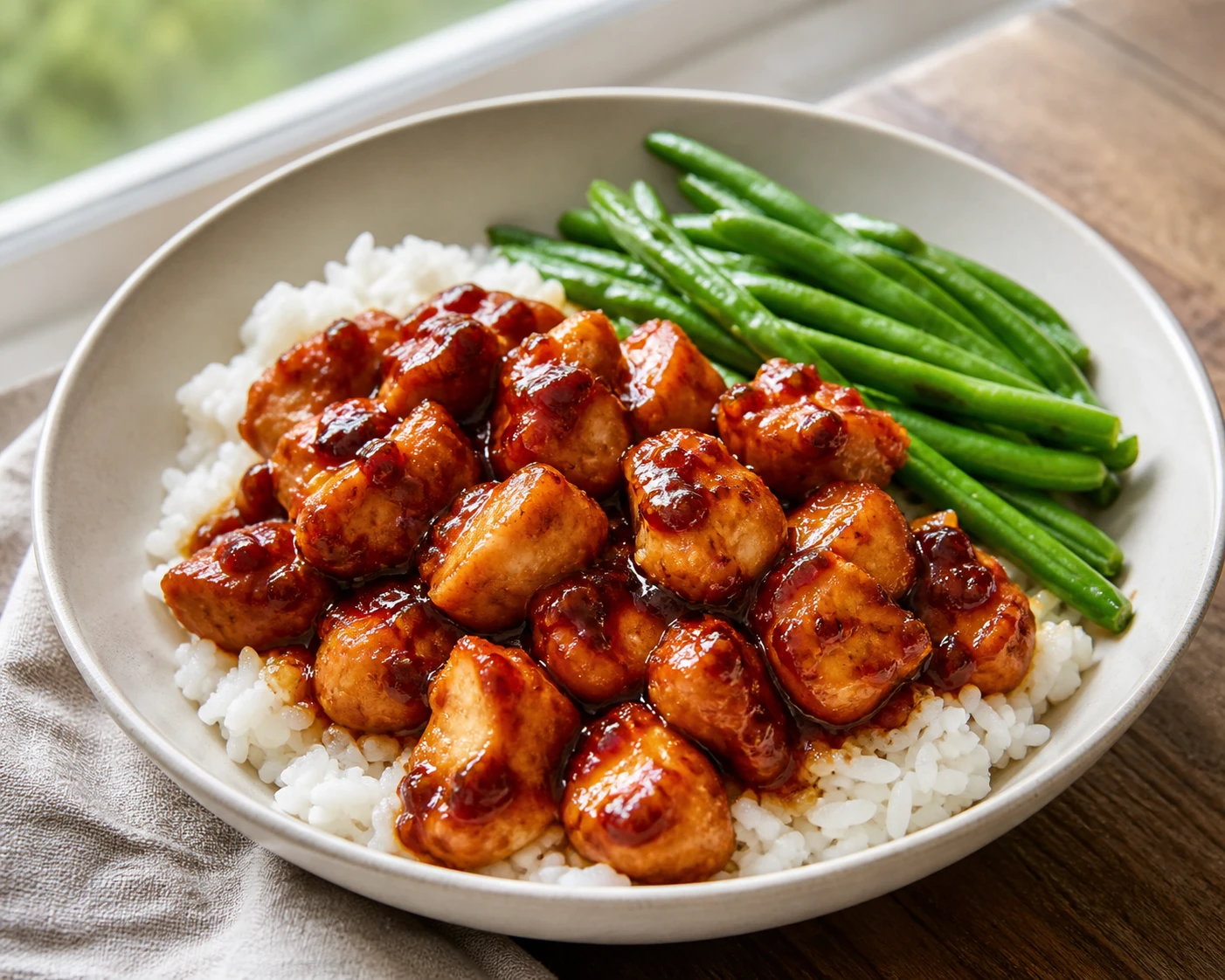
Crisp chicken bites meet a creamy, spicy gochujang glaze and tangy carrot ribbons in this Korean-inspired bang bang chicken.
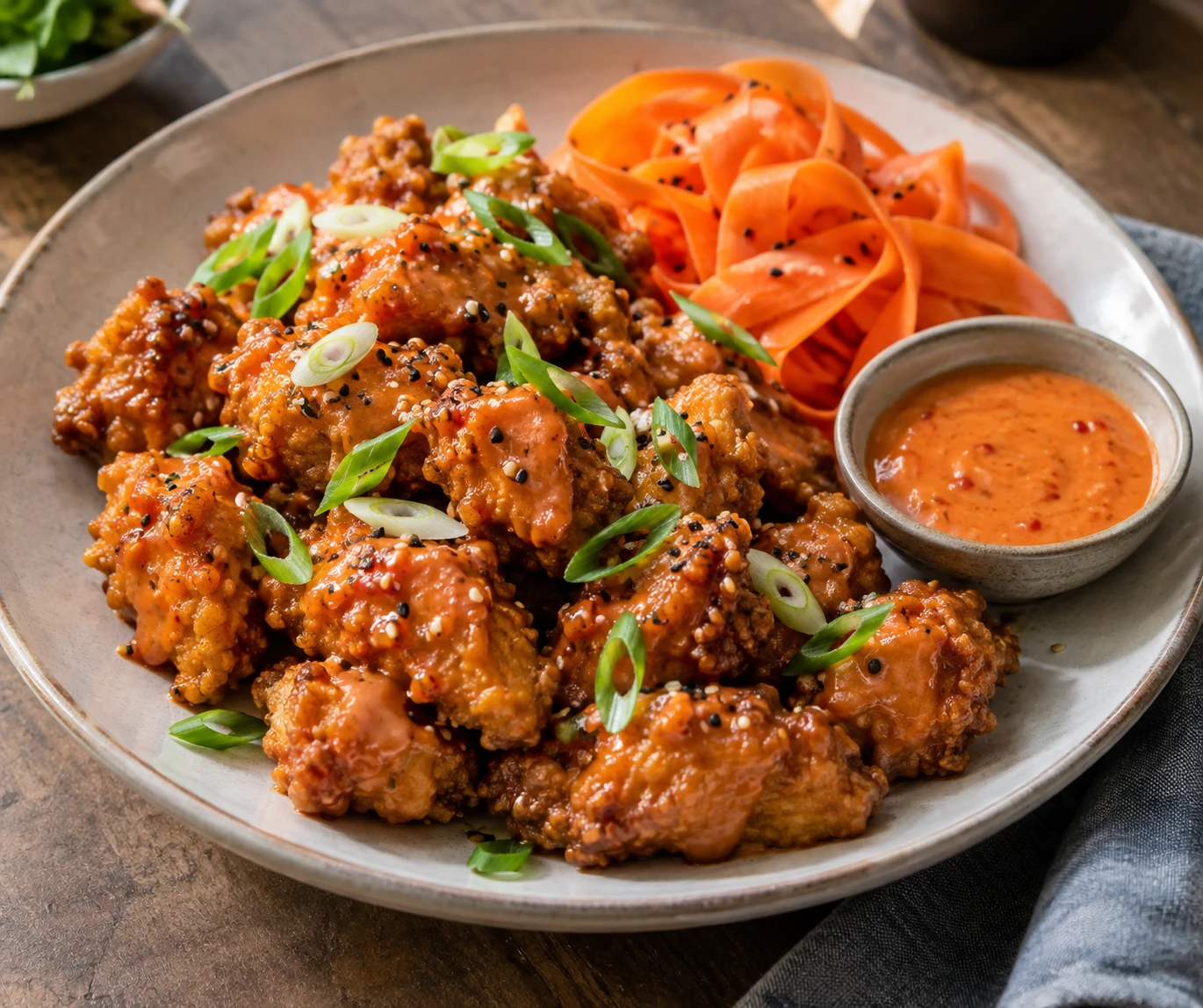
Bang bang chicken gets a Korean-inspired turn here through gochujang, which brings chile warmth and savory depth to the creamy sauce. Quick-pickled carrot ribbons cut through that richness while keeping the plate colorful and crisp.
Start with the carrots
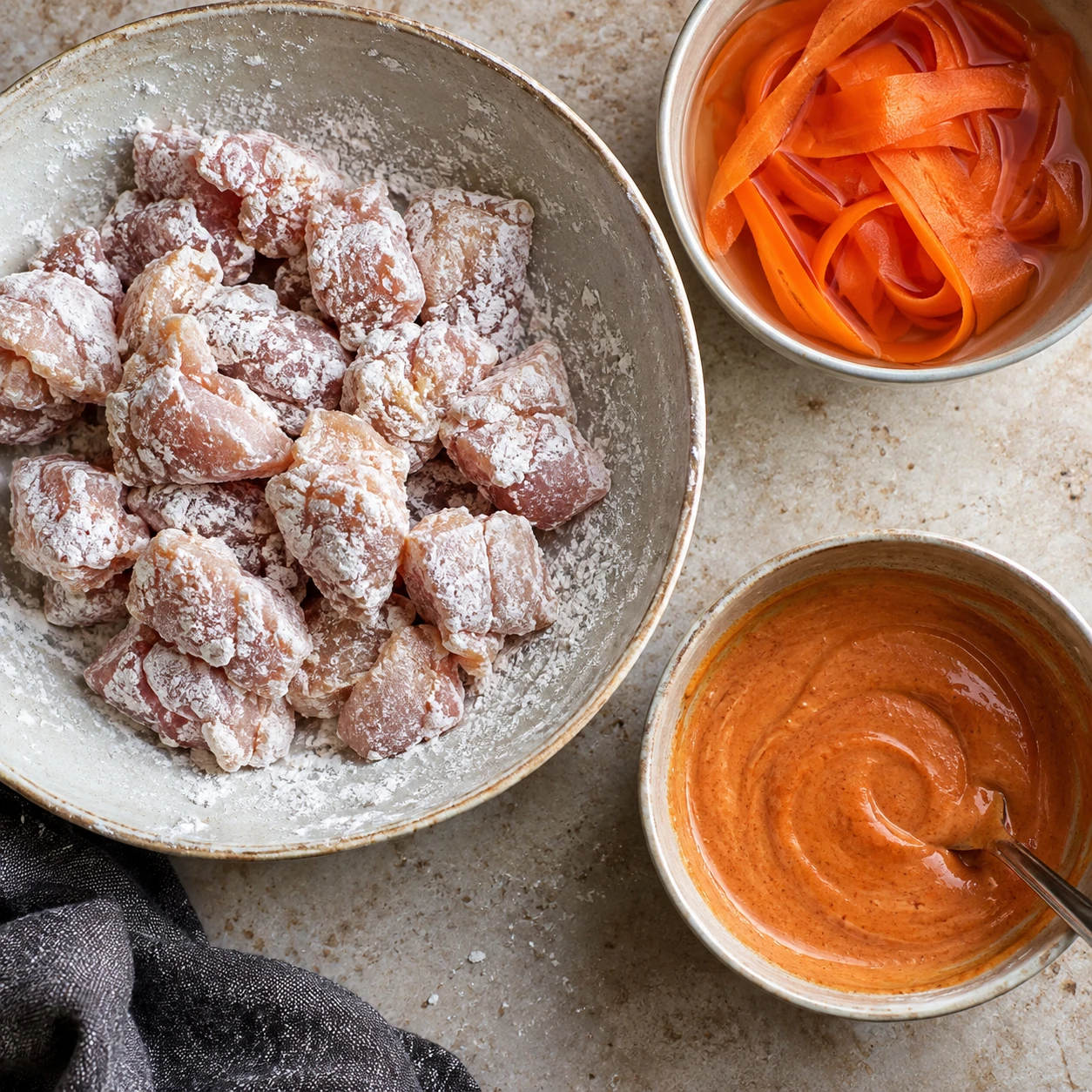
A short rest in rice vinegar is enough to make thin carrot ribbons flexible without taking away their snap. Turn them once while the chicken cooks, then drain them before plating so their tang stays distinct from the creamy sauce.
Keep the sauce balanced
Gochujang lends the bang bang sauce a savory heat, while honey softens its edge and vinegar keeps the mayonnaise lively. Dividing the sauce before it meets the chicken gives you a light glaze and a clean dipping portion for the table.
Build a thin crisp crust
Patting the thigh pieces dry helps the cornstarch cling as a fine coating rather than a paste. Frying in two uncrowded batches lets that coating turn golden while the chicken reaches 165 F inside.
Bring the textures together
Toss the hot chicken gently with only its allotted sauce, then move it straight to the platter. Place the drained carrots alongside and finish with scallions so each serving can combine crisp, creamy, and tart bites.
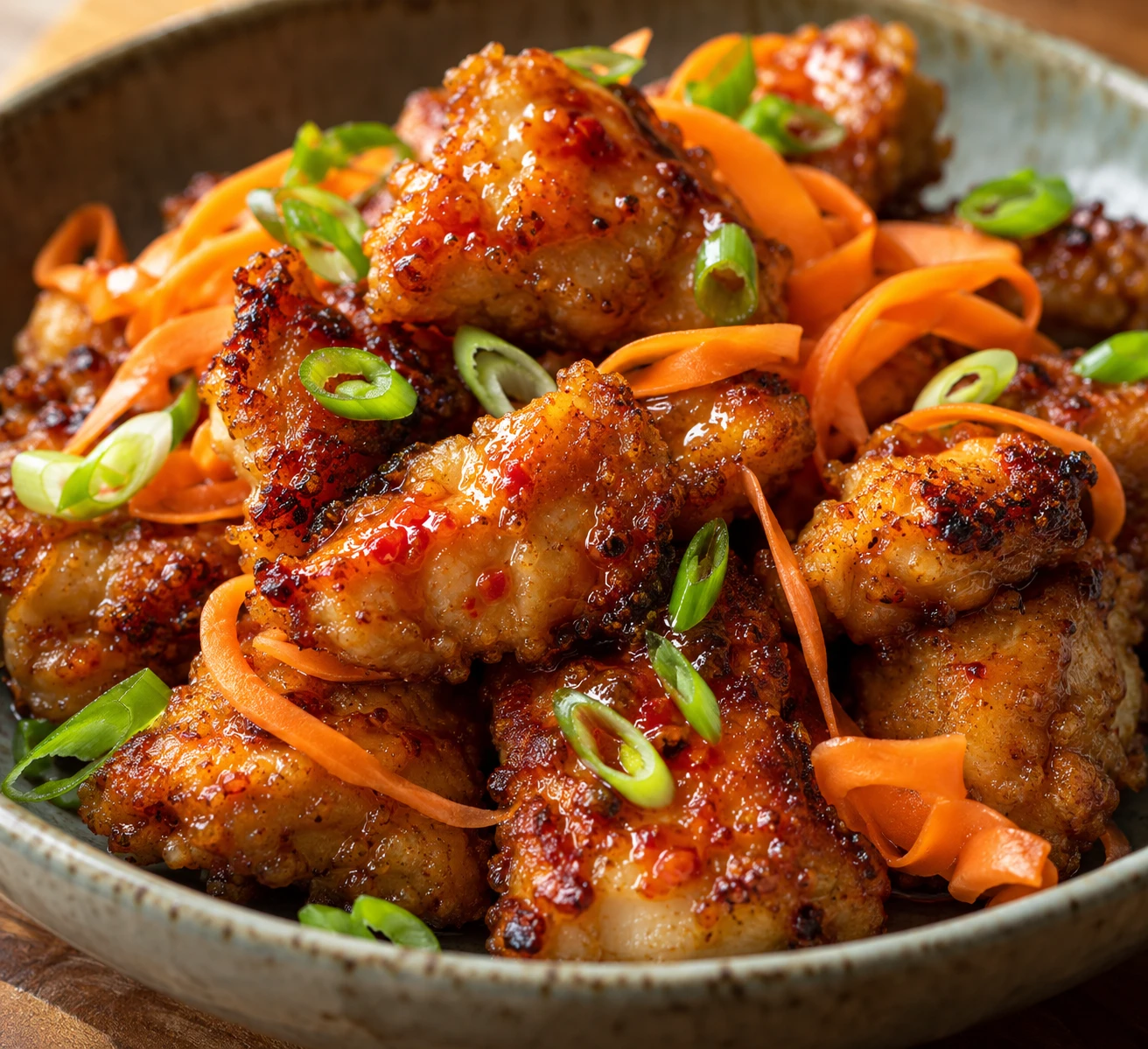
Gochujang Bang Bang Chicken
Ingredients
- • 1 1/2 lb boneless, skinless chicken thighs, cut into 1-inch pieces
- • 1/2 cup cornstarch
- • 1 tsp kosher salt
- • 1/3 cup neutral oil, for shallow-frying
- • 1/3 cup mayonnaise
- • 2 tbsp gochujang
- • 2 tbsp rice vinegar, divided
- • 1 tbsp honey
- • 2 medium carrots, peeled into ribbons
- • 2 scallions, thinly sliced
Method
Quick-pickle the carrots
Toss the carrot ribbons with 1 tbsp rice vinegar in a bowl and set aside while you cook; turn them once so they soften slightly but keep their crunch.
Look for: Carrot ribbons are glossy and bend without going limp.
Mix the bang bang sauce
Whisk the mayonnaise, gochujang, honey, and remaining 1 tbsp rice vinegar until smooth. Set aside half for serving so it never touches raw chicken.
Look for: The sauce is smooth, creamy, and evenly red-orange.
Coat the chicken
Pat the chicken pieces dry, season with kosher salt, then toss with cornstarch until every surface has a thin, dry coating; shake off loose excess.
Look for: The chicken looks lightly dusted, with no wet patches or thick clumps.
Heat the oil
Pour the neutral oil into a large skillet to form a shallow layer and heat over medium-high until a pinch of cornstarch sizzles immediately.
Look for: A test pinch of cornstarch bubbles on contact without smoking.
Fry the first batch
Lay half the chicken in a single layer in the hot oil. Cook for 3 to 4 minutes per side, turning once, until golden and the thickest piece reaches 165 F; transfer to a rack or paper towels.
Look for: The coating is golden and crisp, and the thickest piece registers 165 F.
Fry the second batch
Fry the remaining chicken in the same way, adjusting the heat if the coating darkens too quickly. Let the pieces drain briefly so the crust stays crisp.
Look for: The second batch is golden, crisp, and cooked to 165 F.
Dress the chicken
Transfer the hot chicken to a clean bowl and gently toss with the sauce portion reserved for coating, using just enough to glaze the pieces without soaking the crust.
Look for: Each piece has a light glossy coating and visible crisp edges.
Finish and serve
Pile the chicken on a platter, drain and tuck the pickled carrot ribbons alongside, then scatter over sliced scallions. Serve at once with the untouched sauce portion for dipping.
Look for: The carrots remain bright and crunchy beside the sauced chicken.