" fill="%23faf1da" stroke-width="1.8"/>%0A <ellipse cx="64.5" cy="50" rx="43" ry="12" transform="rotate(4 64.5 50)" stroke="%23938466"/>%0A <path d="m26 44 1 10m3-12 1 14m3-14 1 15m3-14 1 15m4-14 1 14m4-13 1 14m39-10-1 10m5-9-1 8m5-7-1 5" stroke="%23b2a181" stroke-width=".7"/>%0A <path d="M55 60c3-10 12-14 23-10l47-44c7-6 15-6 15-2 0 5-9 11-14 14L82 60c-8 4-21 4-27 0Z" fill="%23bc8c48" stroke-width="1.6"/>%0A <path d="M61 59c3-5 9-8 15-5l-4 7m8-8 49-45 6-4M84 52l45-41" stroke="%2376562e" stroke-width="1"/>%0A <path d="M20 53c18 14 69 19 90 2" stroke="%23514431" stroke-width="2"/>%0A <path d="M27 59c22 11 59 14 78 2" stroke="%23fff9e9" stroke-width="2"/>%0A <path d="m48 87 1 1m7 8 1 1m6-12 1 1m6 12 1 1m6-9 1 1m-24 9 1 1m19 4 1-1m10-16 1 1" stroke="%23aa9b7c"/>%0A </g>%0A</svg>%0A)
19-Minute Pesto Chicken Pasta
A fast, balanced pesto pasta uses thin chicken and frozen peas to keep dinner quick, while starchy pasta water makes prepared pesto feel like a fresh sauce.
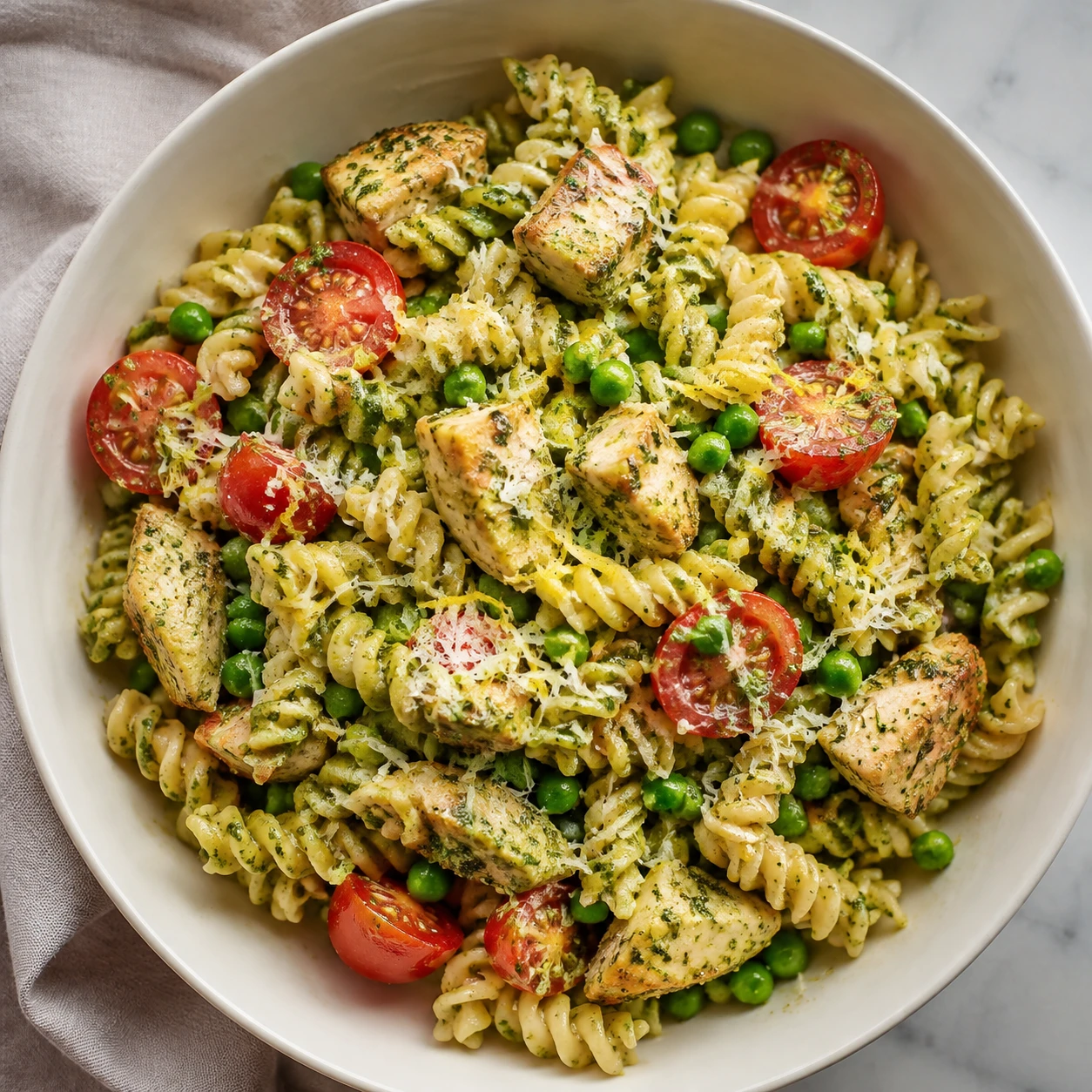
This is the kind of weeknight pasta that earns its speed through sequencing, not shortcuts that flatten the flavor. Thin chicken cooks while rotini boils, and frozen peas go into that same pot at the end, leaving only one skillet for the sauce. Prepared basil pesto brings the aromatic work, but a ladle of starchy cooking water changes its character. It becomes a light, glossy coating that clings to the pasta instead of an oily layer at the bottom of the bowl.
A quick dinner with a real rhythm
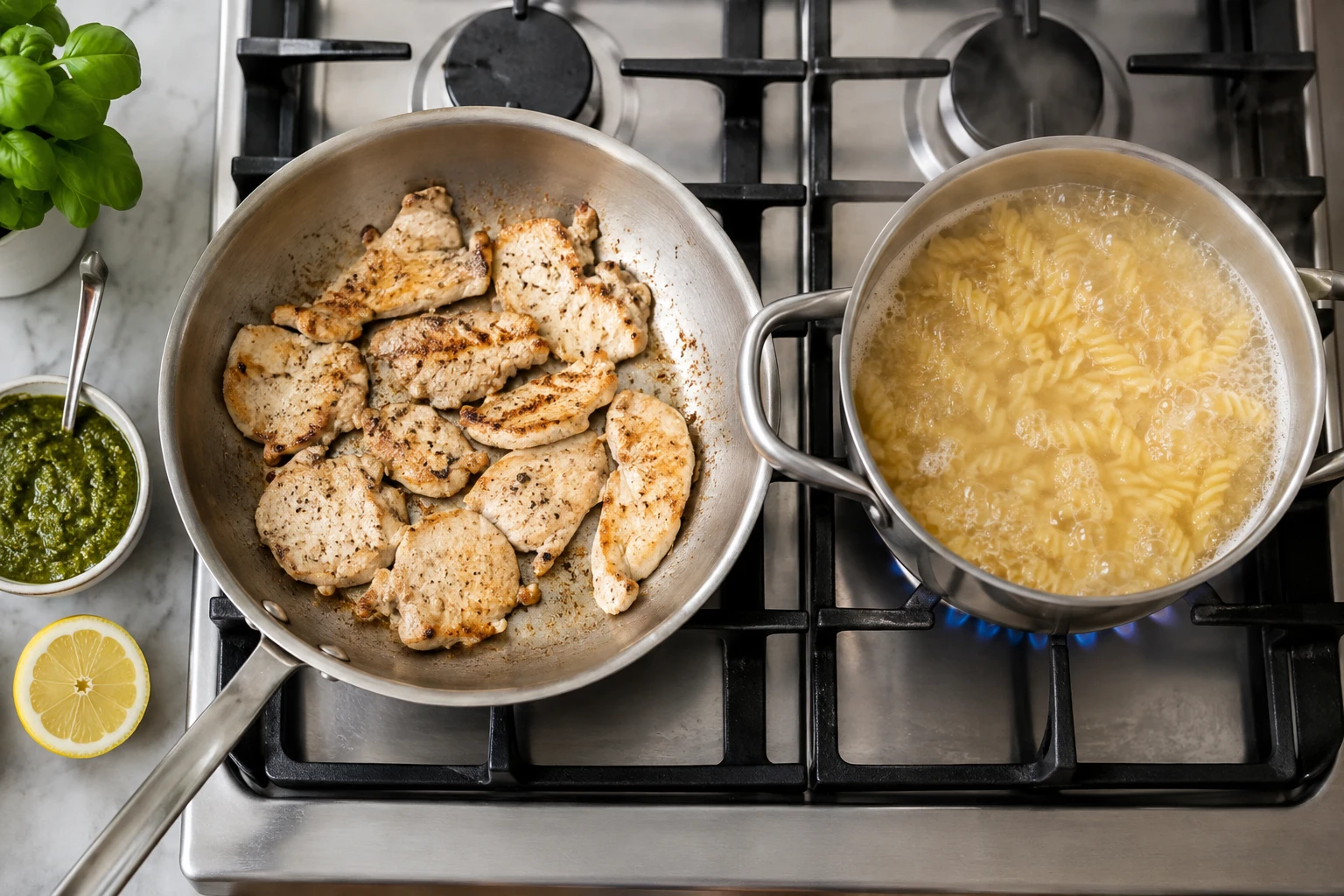
Start the pasta water before touching the chicken, then use the boil time to cook the thin slices in a single layer. That overlap leaves room for a little browning while keeping the dinner on a tight weeknight timeline.
Let the pasta pot handle the vegetables
Frozen peas need only a brief dunk to become sweet and tender, so add them during the final moments of the pasta's cook. Draining them with the rotini saves a pan, a burner, and the small bit of fuss that can derail a quick dinner.
Turn pesto into sauce
Take the skillet off heat before adding pesto so its basil flavor stays vivid. Stirring in reserved pasta water and Parmesan gives the pesto enough body to coat the chicken and spirals evenly without relying on additional oil.
Finish with freshness
Lemon wakes up jarred pesto, and cherry tomatoes are folded in only at the end so they stay juicy and bright. Serve right away, with a little extra Parmesan and more pasta water nearby if the sauce tightens as it sits.
19-Minute Pesto Chicken Pasta
Ingredients
- • 10 oz rotini pasta
- • 1 lb thinly sliced chicken breast
- • 1/3 cup prepared basil pesto
- • 10 oz frozen peas
- • 1 pint cherry tomatoes, halved
- • 1/3 cup finely grated Parmesan, plus more to serve
- • 1 lemon
- • 1 tsp kosher salt, plus more for the pasta water
- • 1/4 tsp black pepper
Method
Boil the pasta water
Bring a large pot of well-salted water to a rolling boil over high heat while you halve the cherry tomatoes and zest and juice the lemon.
Look for: Large, active bubbles break across the whole surface of the water.
Season the chicken
Season the thinly sliced chicken breast with the kosher salt and black pepper, coating both sides so it is ready to cook quickly.
Look for: The chicken has an even, light seasoning with no clumps of salt.
Cook the pasta
Add the rotini pasta to the boiling water and cook, stirring once or twice, until it is nearly al dente according to the package timing.
Look for: The rotini is pliable with a small firm center when bitten.
Cook the chicken
While the rotini cooks, heat a large skillet over medium-high heat and cook the chicken breast in a single layer, turning once, until opaque and cooked through.
Look for: The chicken is lightly browned and the thickest piece reaches 165 F.
Add the peas
Add the frozen peas directly to the pasta pot for the final 2 minutes of cooking so they heat through without needing a separate pan.
Look for: The peas are bright green, hot through, and the pasta remains just firm.
Reserve and drain
Scoop out 1 cup of the starchy pasta water, then drain the rotini and peas together; keep the skillet off the heat.
Look for: The reserved water looks cloudy from the pasta starch.
Make a light pesto sauce
Add the prepared basil pesto, 1/2 cup reserved pasta water, lemon zest, lemon juice, and grated Parmesan to the skillet with the chicken, stirring until glossy and loose.
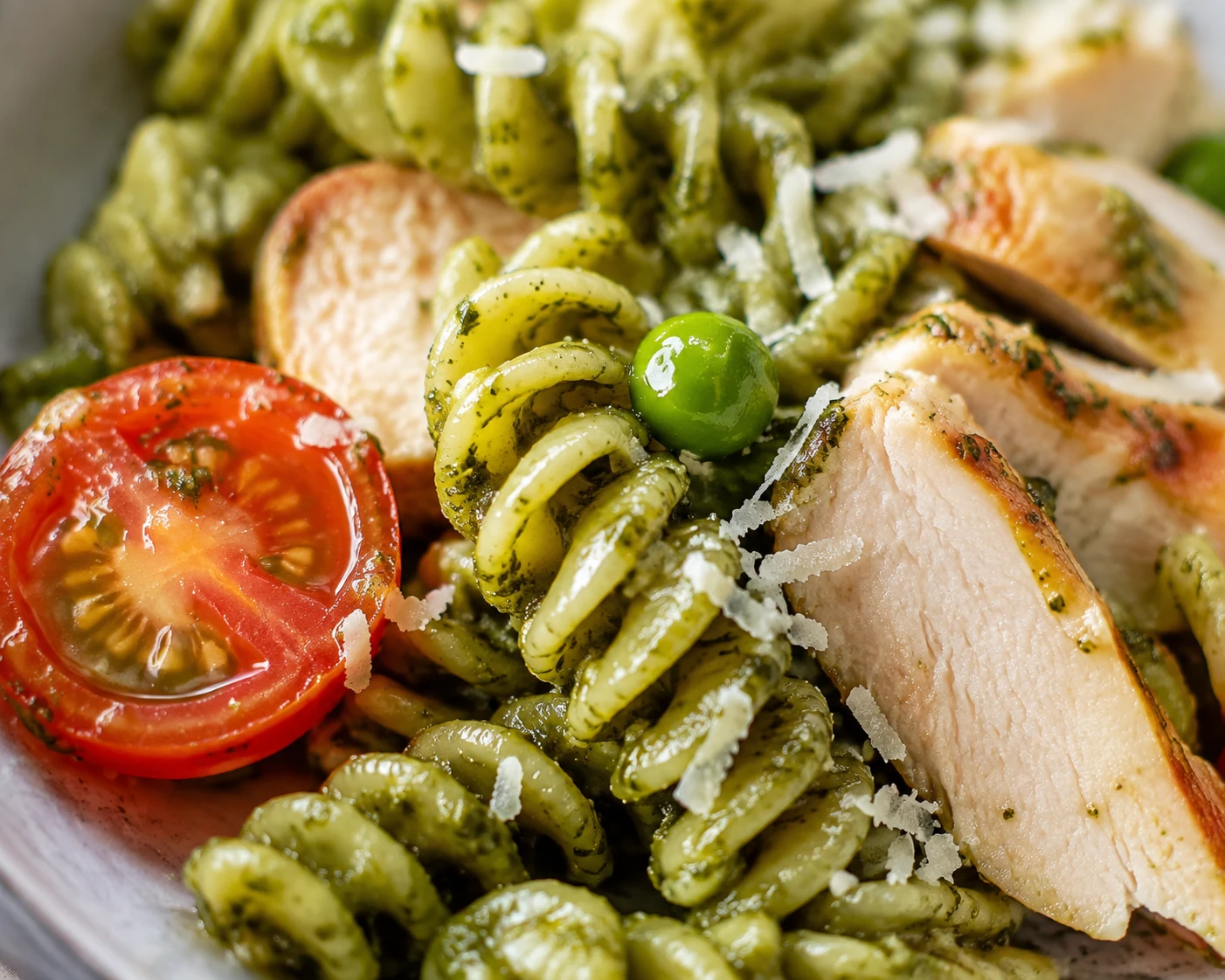
Look for: The pesto becomes a glossy sauce that coats a spoon instead of sitting in an oily layer.
Toss and serve
Add the drained rotini, peas, and cherry tomatoes to the skillet and toss until coated, adding more reserved pasta water as needed; serve with more Parmesan.
Look for: Every spiral is lightly sauced, the tomatoes stay fresh, and the pasta is moist rather than oily.