" fill="%23faf1da" stroke-width="1.8"/>%0A <ellipse cx="64.5" cy="50" rx="43" ry="12" transform="rotate(4 64.5 50)" stroke="%23938466"/>%0A <path d="m26 44 1 10m3-12 1 14m3-14 1 15m3-14 1 15m4-14 1 14m4-13 1 14m39-10-1 10m5-9-1 8m5-7-1 5" stroke="%23b2a181" stroke-width=".7"/>%0A <path d="M55 60c3-10 12-14 23-10l47-44c7-6 15-6 15-2 0 5-9 11-14 14L82 60c-8 4-21 4-27 0Z" fill="%23bc8c48" stroke-width="1.6"/>%0A <path d="M61 59c3-5 9-8 15-5l-4 7m8-8 49-45 6-4M84 52l45-41" stroke="%2376562e" stroke-width="1"/>%0A <path d="M20 53c18 14 69 19 90 2" stroke="%23514431" stroke-width="2"/>%0A <path d="M27 59c22 11 59 14 78 2" stroke="%23fff9e9" stroke-width="2"/>%0A <path d="m48 87 1 1m7 8 1 1m6-12 1 1m6 12 1 1m6-9 1 1m-24 9 1 1m19 4 1-1m10-16 1 1" stroke="%23aa9b7c"/>%0A </g>%0A</svg>%0A)
Potato Lefse
Cool riced potatoes and light handling make flexible lefse that cook quickly on a dry griddle and welcome a simple buttery finish.
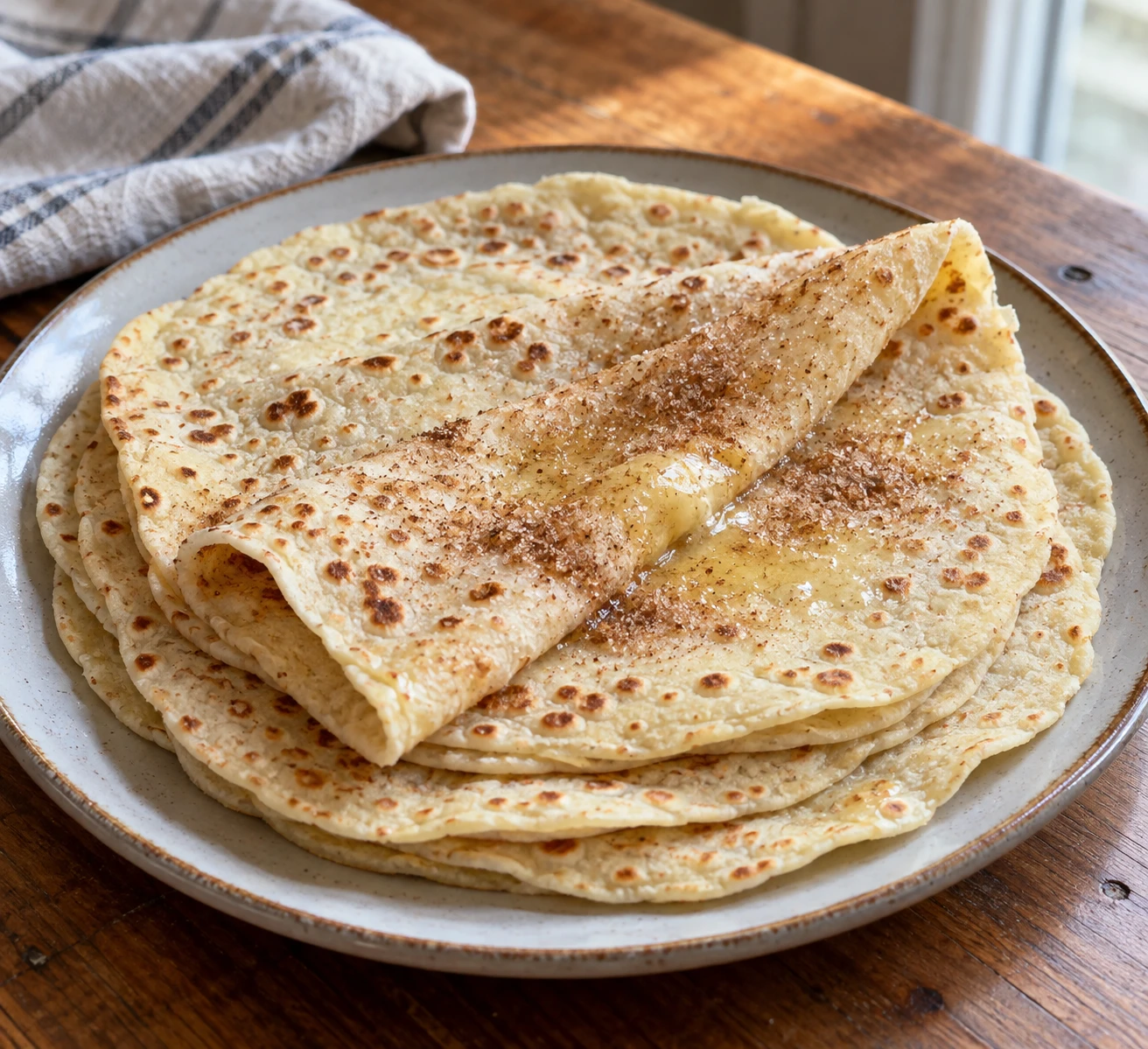
Potato lefse depend on a cool, soft dough and a thin, even roll. A dry, properly heated griddle sets the surface quickly, leaving the rounds tender enough to fold or serve warm with butter and cinnamon sugar.
Start with dry, fluffy potatoes
Ricing the potatoes while they are hot breaks them into a fine, fluffy base without mashing them into a gluey paste. Letting steam escape before chilling keeps excess moisture from demanding extra flour later.
Fold gently and keep cool
Once the potato mixture is cool, fold in the flour only until the dough comes together. A light touch and a cool rest help the dough roll thin without becoming elastic or tough.
Roll without sticking
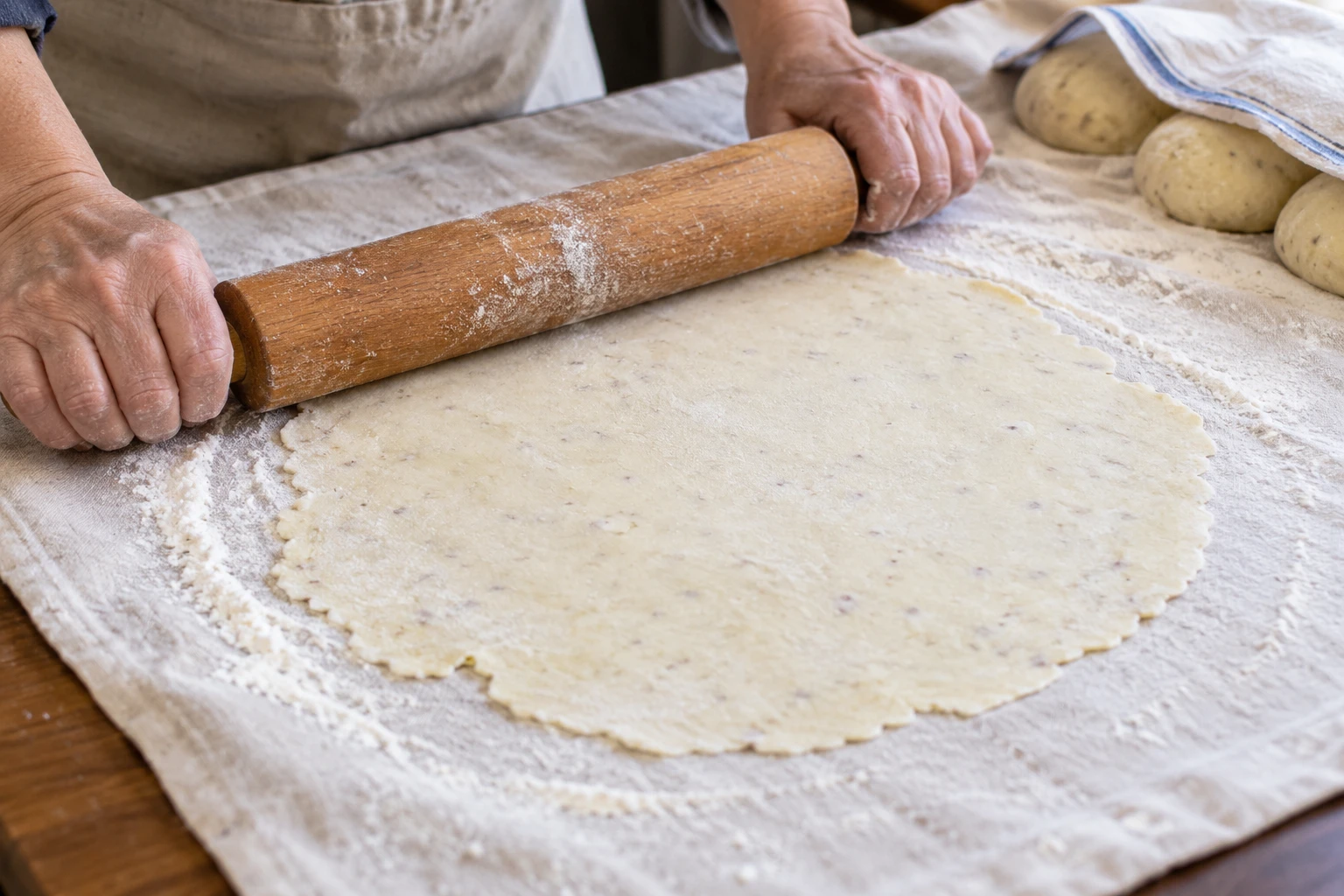
Lightly flour the cloth, then lift the round as you roll so you can spot sticking before it tears. Add flour only to the tacky area; excess flour on the dough can make the cooked lefse dry.
Watch the pale griddle freckles
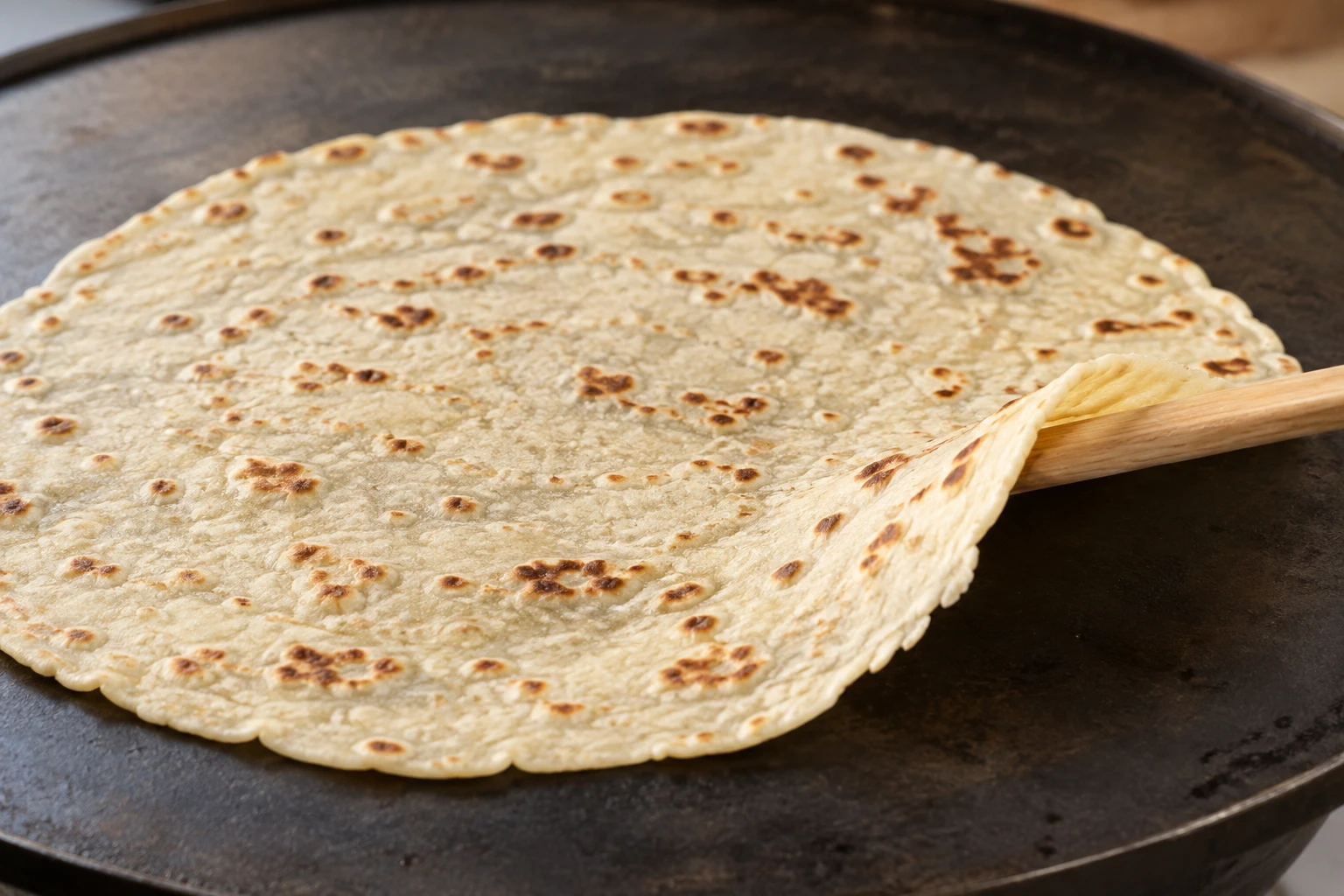
Lefse cook fast on a dry griddle, so stay beside the pan and turn when the surface loses its wet sheen and pale spots appear. If those spots turn dark before the round sets, lower the heat for the next one.
Potato Lefse
Ingredients
- • 2 lb russet potatoes, peeled and cut into 1-inch chunks
- • 6 tbsp unsalted butter, divided
- • 1/4 cup heavy cream
- • 1 tsp fine salt
- • 2 cups all-purpose flour, divided
- • 2 tbsp granulated sugar
- • 1 tsp ground cinnamon
Method
Simmer the potatoes
Put the peeled russet potato chunks in a pot and cover with cool water. Bring to a boil, then simmer until a paring knife slides through the centers without resistance, about 18 minutes.
Look for: The largest potato chunks are tender all the way through, with no firm core.
Drain and rice
Drain the potatoes thoroughly, return them to the warm pot, and set over low heat for 1 minute to evaporate surface moisture. Rice the potatoes while hot into a wide bowl, working in batches so no lumps remain.
Look for: The riced potatoes look fluffy and dry rather than glossy or wet.
Season and cool the potatoes
Fold 4 tbsp of the butter, the cream, and salt through the hot riced potatoes just until evenly combined. Spread the mixture in a shallow layer so it cools quickly and does not steam under a cover.
Look for: The butter has melted through and the potato mixture is evenly seasoned.
Chill the mixture
Let the potatoes cool uncovered for 10 minutes, then cover and refrigerate for 20 minutes, until cool throughout. Keeping the potato base cool makes the dough easier to roll and helps it stay tender.
Look for: The center of the potato mixture feels cool, not warm, before flour is added.
Make and portion the dough
Gently fold 1 1/2 cups of the flour into the chilled potatoes until a soft dough just holds together; stop as soon as no dry pockets remain. Divide into 12 portions, cover, and let them rest for 5 minutes while the griddle heats.
Look for: The dough is cool, soft, and slightly tacky, not elastic or heavily kneaded.
Heat the griddle
Set a large dry griddle over medium-high heat and preheat it for 8 to 10 minutes. Test with a pinch of flour: it should toast gradually, not smoke or darken immediately; lower the heat if it scorches.
Look for: A pinch of flour toasts without smoking, and the bare griddle has no oil sheen.
Roll a thin round
Lightly flour a pastry cloth with some of the remaining flour and roll one dough portion at a time into an even 8-inch round, lifting it now and then so it releases cleanly. Dust sparingly only where it sticks and keep the other portions covered so they stay cool.
Look for: The round is very thin and even, with no damp patches or tears.
Cook and turn the lefse
Lift the round with a lefse stick or long thin spatula and lay it on the dry griddle. Cook the first side 30 to 45 seconds, until the surface looks matte with scattered pale-brown spots; turn before those spots become dark, then cook the second side 20 to 30 seconds and stack under a clean towel.
Look for: The first side is freckled with pale brown spots while the lefse remains flexible, not crisp.
Finish and serve
Repeat rolling and cooking with the remaining portions, adjusting the griddle to prevent dark scorching. Melt the remaining 2 tbsp butter, stir the sugar and cinnamon together, then brush the warm lefse lightly with butter and sprinkle with cinnamon sugar; serve warm or alongside a savory meal.
Look for: The lefse is soft and pliable, with light griddle spots and a thin buttery finish.