" fill="%23faf1da" stroke-width="1.8"/>%0A <ellipse cx="64.5" cy="50" rx="43" ry="12" transform="rotate(4 64.5 50)" stroke="%23938466"/>%0A <path d="m26 44 1 10m3-12 1 14m3-14 1 15m3-14 1 15m4-14 1 14m4-13 1 14m39-10-1 10m5-9-1 8m5-7-1 5" stroke="%23b2a181" stroke-width=".7"/>%0A <path d="M55 60c3-10 12-14 23-10l47-44c7-6 15-6 15-2 0 5-9 11-14 14L82 60c-8 4-21 4-27 0Z" fill="%23bc8c48" stroke-width="1.6"/>%0A <path d="M61 59c3-5 9-8 15-5l-4 7m8-8 49-45 6-4M84 52l45-41" stroke="%2376562e" stroke-width="1"/>%0A <path d="M20 53c18 14 69 19 90 2" stroke="%23514431" stroke-width="2"/>%0A <path d="M27 59c22 11 59 14 78 2" stroke="%23fff9e9" stroke-width="2"/>%0A <path d="m48 87 1 1m7 8 1 1m6-12 1 1m6 12 1 1m6-9 1 1m-24 9 1 1m19 4 1-1m10-16 1 1" stroke="%23aa9b7c"/>%0A </g>%0A</svg>%0A)
Fish and Chips
A cold, lightly mixed batter and a two-stage fry make crisp fish and chips achievable in an ordinary home kitchen.
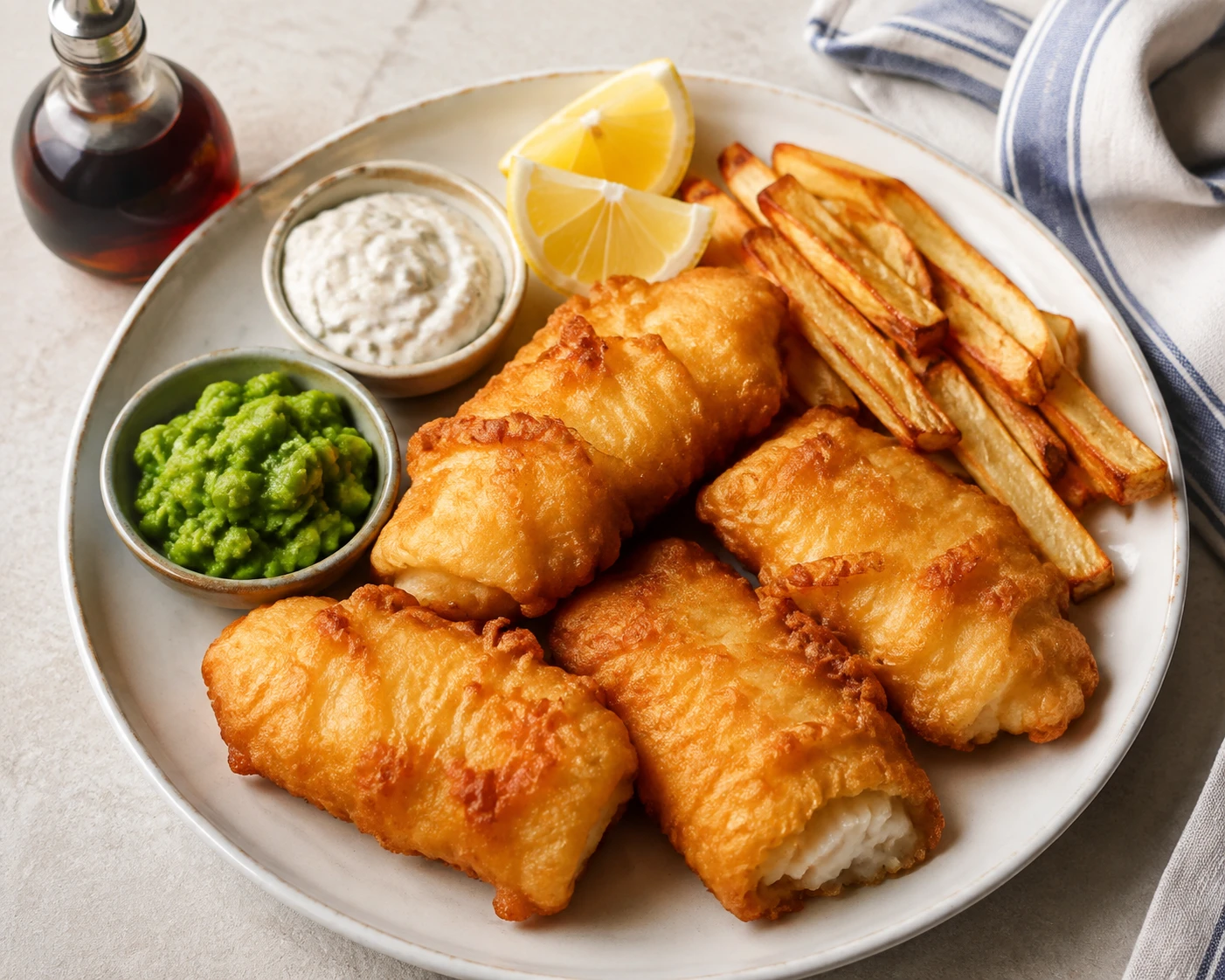
Cod and haddock both provide the clean flavor and firm flakes expected here. The key is managing moisture: dry potatoes and fish, cold batter, and a hot enough second fry keep the finished plate crisp rather than greasy.
Give the chips two fries
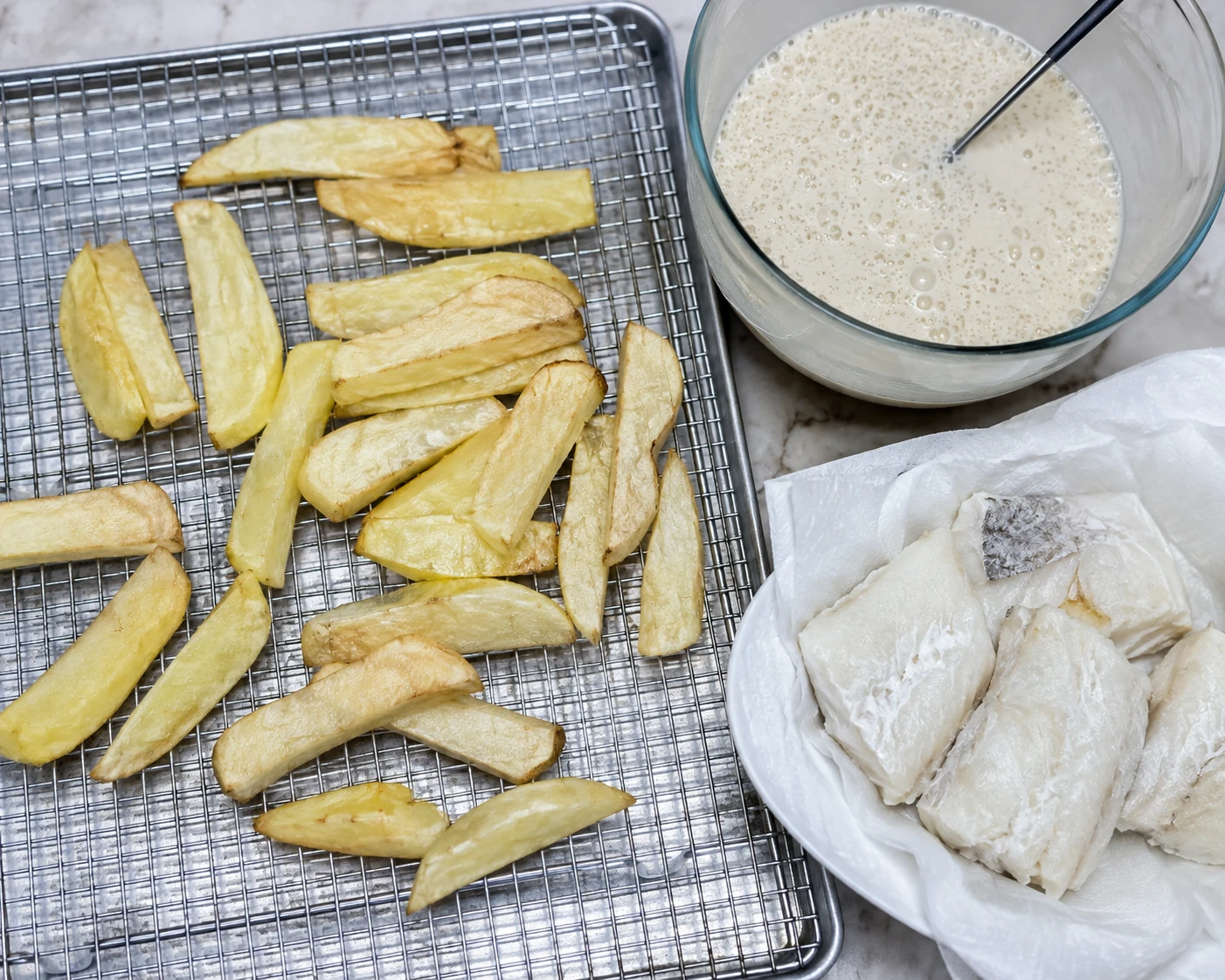
The first, gentler fry cooks the potato through without much color. After a short rest, the hotter second fry creates the browned, crisp exterior while the center stays fluffy.
Keep the batter cold
Cold sparkling water or beer brings bubbles to the batter, and a few small lumps are preferable to a tough, overworked mixture. Flour on the dry fish gives that loose batter something to grip.
Avoid greasy fish
Fry in batches and let the oil recover between them. If the oil temperature drops too far, the batter absorbs oil before its crust can set; a wire rack keeps that crust from steaming after frying.
Serve without delay
Salt the fish and chips at the table and offer tartar sauce, lemon, and vinegar alongside. Malt vinegar is traditional, but cider vinegar supplies the same welcome acidity when it is easier to find.
Fish and Chips
Ingredients
- • 2 lb russet potatoes, scrubbed and cut into chips
- •
- • 1 1/2 cups all-purpose flour, divided
- • 1 tsp baking powder
- • 1 tsp kosher salt, plus more for serving
- •
- • 2 qt neutral frying oil
- • 1/2 cup mayonnaise
- • 2 tbsp chopped dill pickles and capers
- • 1 cup frozen peas, malt vinegar, and lemon wedges
Method
Cut and rinse the chips
Cut the potatoes into evenly sized chips, rinse them under cold water, and dry them thoroughly with clean towels so surface moisture will not splatter in the oil. Use cod by default; use haddock when unavailable. Use sparkling water by default; use light beer for a maltier batter.
Look for: The chips are dry to the touch and roughly the same thickness.
Make tartar sauce
Stir the mayonnaise with chopped dill pickles, capers, a small squeeze of lemon, and a pinch of salt; refrigerate the tartar sauce while you fry.
Look for: The sauce is creamy with finely distributed pickle and caper pieces.
Blanch the chips
Heat the frying oil in a deep Dutch oven to 325 F and fry the potatoes in batches for 6 to 8 minutes, until tender and pale without browning; drain on a rack.
Look for: A chip yields easily to a paring knife but remains pale.
Mix the batter
Whisk 1 cup flour, baking powder, and salt, then whisk in the cold sparkling water or beer just until a loose batter forms; leave a few small lumps rather than overmixing.
Look for: The batter pours in a thick ribbon and still looks lightly bubbly.
Flour the fish
Pat the cod or haddock dry and coat each portion in the remaining 1/2 cup flour, shaking off excess so the batter can cling in a thin, even layer.
Look for: No wet patches remain on the fish and the flour coating is thin.
Fry the fish
Raise the oil to 375 F, dip the floured fish into batter, and fry in batches for 4 to 6 minutes, turning once, until deeply golden and the fish flakes easily.
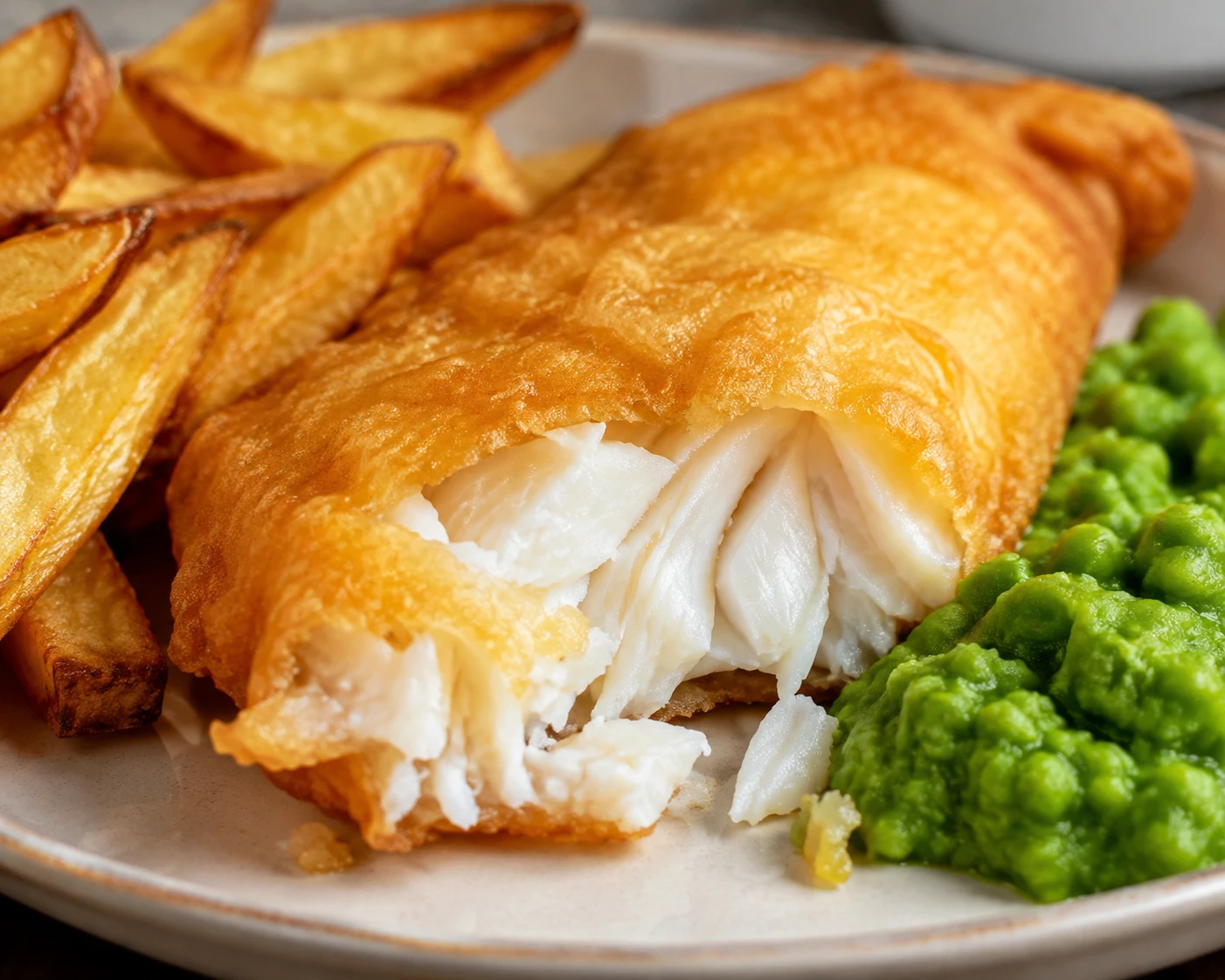
Look for: The batter is crisp and golden, and the fish separates into moist flakes.
Crisp the chips and peas
Return the blanched chips to the 375 F oil for 3 to 5 minutes until deeply crisp, then warm the peas with a splash of water and mash them roughly with salt and vinegar.
Look for: The chips are golden and crisp; the peas are tender with a few whole peas remaining.
Season and serve
Sprinkle the fish and chips with salt, serve immediately with tartar sauce, mushy peas, lemon wedges, and malt vinegar; use cider vinegar if malt vinegar is unavailable.
Look for: The batter audibly crackles when cut and the chips remain crisp.