" fill="%23faf1da" stroke-width="1.8"/>%0A <ellipse cx="64.5" cy="50" rx="43" ry="12" transform="rotate(4 64.5 50)" stroke="%23938466"/>%0A <path d="m26 44 1 10m3-12 1 14m3-14 1 15m3-14 1 15m4-14 1 14m4-13 1 14m39-10-1 10m5-9-1 8m5-7-1 5" stroke="%23b2a181" stroke-width=".7"/>%0A <path d="M55 60c3-10 12-14 23-10l47-44c7-6 15-6 15-2 0 5-9 11-14 14L82 60c-8 4-21 4-27 0Z" fill="%23bc8c48" stroke-width="1.6"/>%0A <path d="M61 59c3-5 9-8 15-5l-4 7m8-8 49-45 6-4M84 52l45-41" stroke="%2376562e" stroke-width="1"/>%0A <path d="M20 53c18 14 69 19 90 2" stroke="%23514431" stroke-width="2"/>%0A <path d="M27 59c22 11 59 14 78 2" stroke="%23fff9e9" stroke-width="2"/>%0A <path d="m48 87 1 1m7 8 1 1m6-12 1 1m6 12 1 1m6-9 1 1m-24 9 1 1m19 4 1-1m10-16 1 1" stroke="%23aa9b7c"/>%0A </g>%0A</svg>%0A)
Filipino Pork Adobo
A vinegar-forward braise turns browned pork, garlic, soy sauce, bay, and peppercorns into tender meat with a dark, glossy finish.
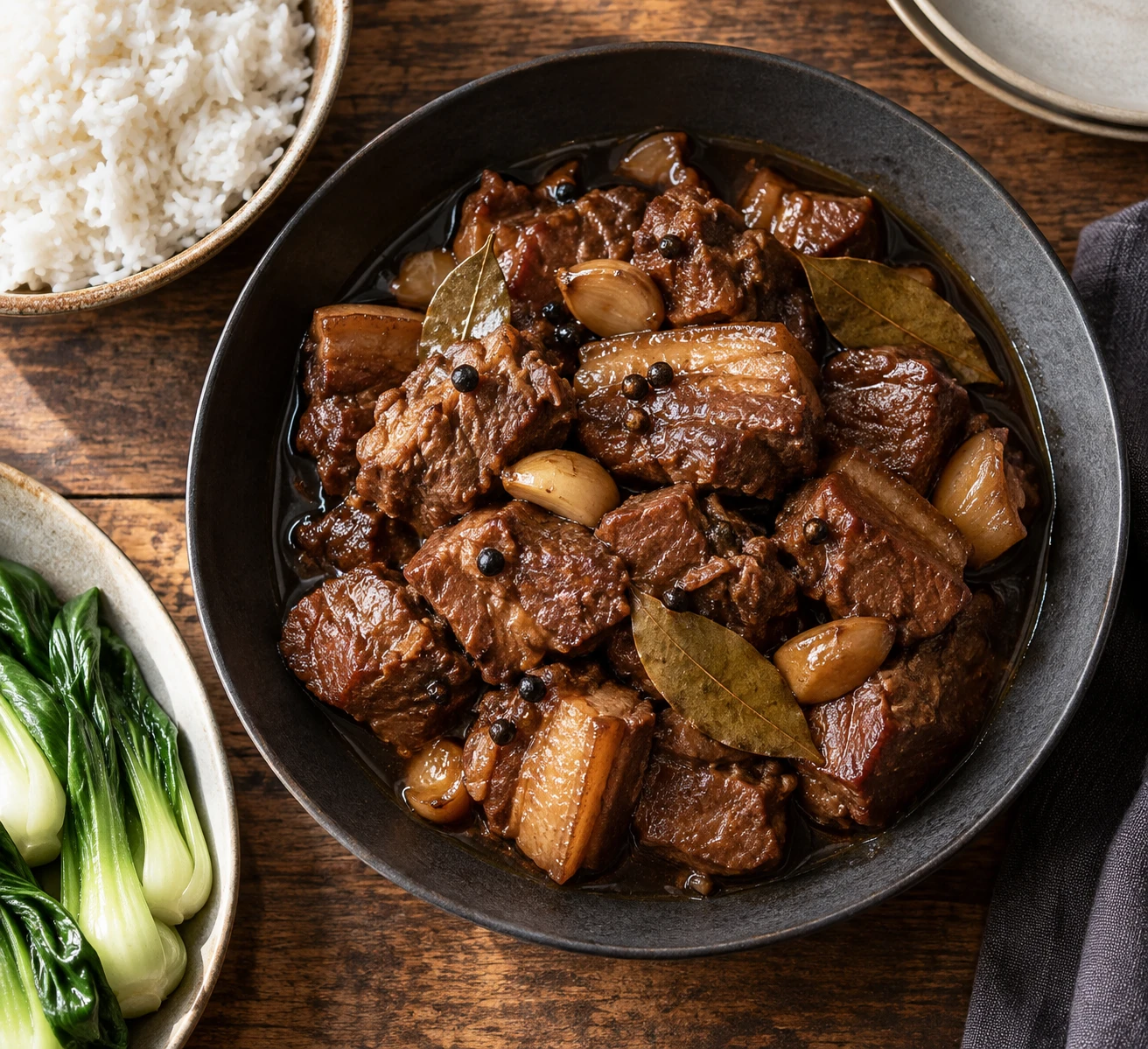
Filipino pork adobo balances assertive vinegar with savory soy sauce, fragrant garlic, bay leaves, and whole peppercorns. Browning the pork first gives the braise deeper savor, while an uncovered reduction transforms the cooking liquid into a lacquer rather than a broth.
Begin with real browning
Moisture and crowding are the enemies of a good sear, so dry the pork and work in two batches. Those browned patches season both the meat and the fond that will dissolve into the braising liquid.
Give the vinegar its moment
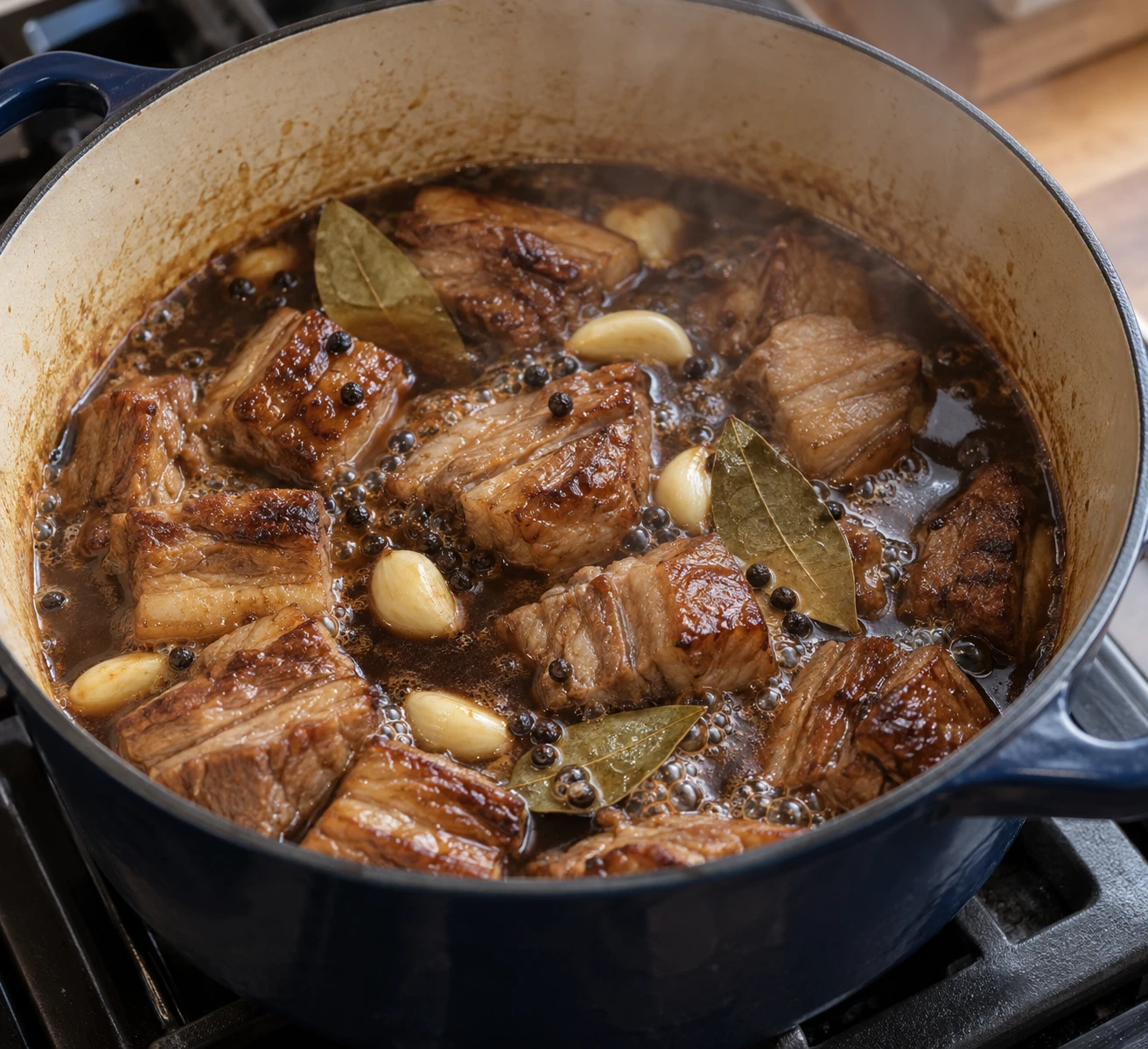
Once the vinegar enters the pot, let it simmer uncovered without stirring for three minutes. That brief pause allows the harsh raw acetic fumes to dissipate; afterward, stir in the soy sauce and remaining seasonings without losing adobo's bright, necessary tang.
Braise gently, then change gears
A quiet covered simmer softens pork shoulder without breaking it apart. Once a fork enters easily, remove the lid and increase the heat so water evaporates and the sauce can concentrate around the tender pieces.
Watch the final gloss
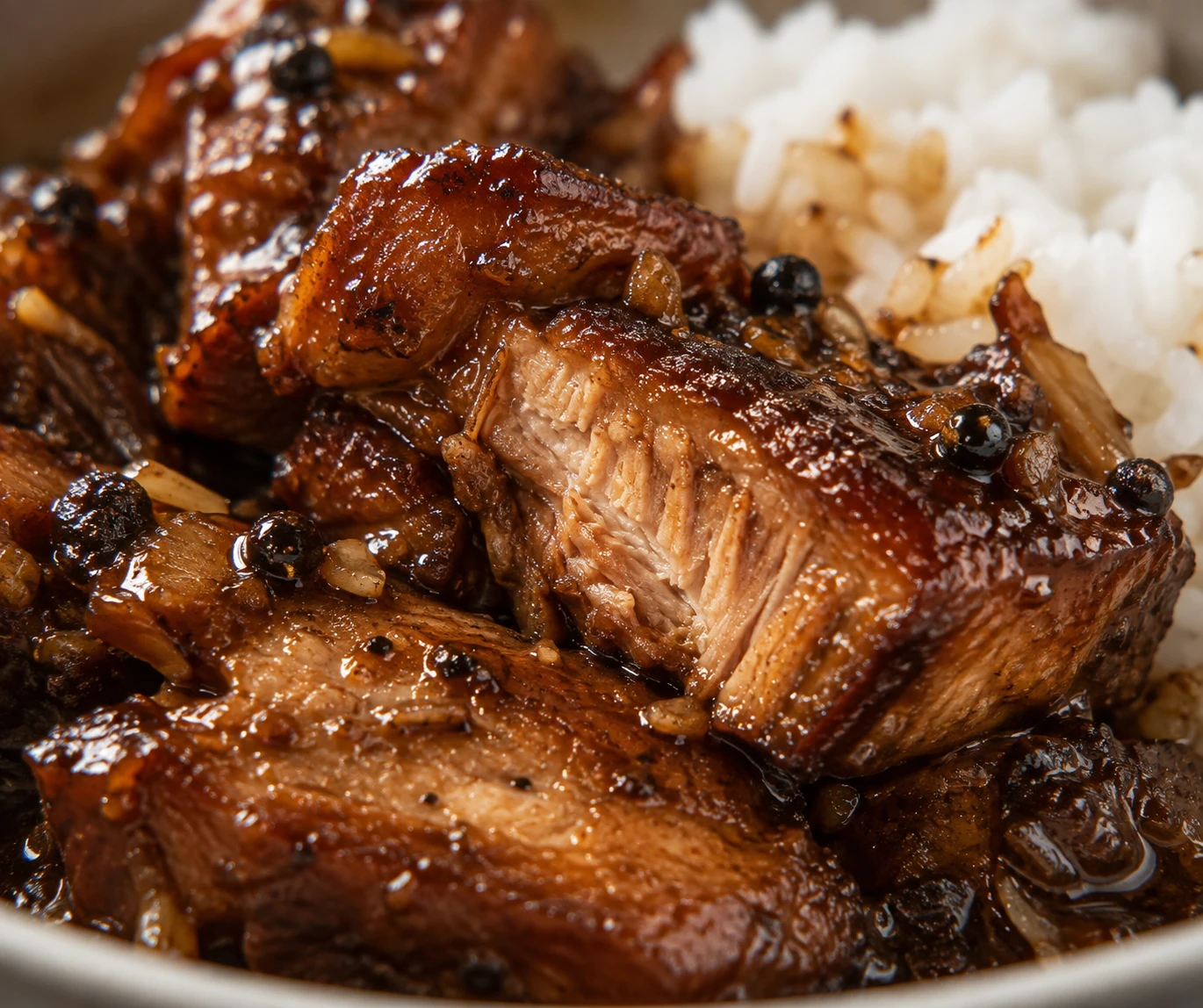
The reduction accelerates near the end, so turn the pork often and watch for a temporary trail behind the spoon. If the sauce starts sticking before it looks glossy, lower the heat and add a tablespoon of water to loosen it.
Keep the plate simple
Steamed jasmine rice catches the intensely savory sauce, while tender-crisp bok choy gives the plate a clean green counterpoint. Spoon a little extra glaze over the rice but keep the vegetable mostly bare.
Make room for tomorrow
Adobo is especially rewarding after an overnight rest, when the garlic, vinegar, and soy flavors settle into a more integrated whole. Cool the pork in its sauce, refrigerate it for up to three days, and reheat gently with a splash of water to restore the gloss.
Filipino Pork Adobo
Ingredients
- • 3 lb boneless pork shoulder, cut into 1 1/2-inch pieces
- • 1 tbsp neutral oil
- • 12 garlic cloves, lightly crushed and peeled
- • 3/4 cup cane vinegar
- • 1/2 cup Filipino soy sauce
- • 1 cup water
- • 4 dried bay leaves
- • 2 tsp whole black peppercorns
- • 1 tsp brown sugar
- • 6 cups hot steamed jasmine rice
- • 1 lb baby bok choy, halved lengthwise
Method
Dry the pork
Pat the pork shoulder pieces very dry with paper towels and leave them uncovered while the pot heats; a dry surface will brown rather than steam.
Look for: The pork surfaces look matte with no visible moisture.
Brown in batches
Heat the neutral oil in a large Dutch oven over medium-high heat. Brown the pork in two batches for about 8 minutes per batch, turning to color several sides, then transfer it to a plate.
Look for: The pork has deep golden-brown patches and the pot holds a dark savory fond.
Bloom the garlic
Lower the heat to medium, add the crushed garlic, and cook for 1 minute, moving it around the pot until fragrant but not browned.
Look for: The garlic smells fragrant and remains pale gold.
Simmer the vinegar untouched
Return the pork and its juices to the pot, pour in the cane vinegar, and bring it to a lively simmer. Cook uncovered without stirring for 3 minutes so the sharp raw vinegar fumes can dissipate before the liquid is mixed.
Look for: The vinegar bubbles steadily and its aroma changes from harsh to pleasantly tangy.
Build the braise
Add the Filipino soy sauce, water, bay leaves, whole peppercorns, and brown sugar, then stir once while scraping up the browned fond. Bring the liquid back to a simmer.
Look for: The fond has dissolved and the dark braising liquid reaches about halfway up the pork.
Braise until tender
Cover, reduce the heat to low, and simmer gently for 55 to 65 minutes, stirring once or twice, until the pork is tender but still holds its shape.
Look for: A fork slides easily into the pork, and the pieces yield without falling apart.
Steam the bok choy
While the pork braises, steam the halved baby bok choy over simmering water for 4 to 5 minutes, until the stems are tender-crisp and the leaves are vivid green; keep warm.
Look for: The stems pierce with slight resistance and the leaves are bright green.
Reduce to a glaze
Uncover the pot, raise the heat to medium-high, and boil for 12 to 18 minutes, stirring and turning the pork often, until the liquid reduces to a glossy sauce that clings to every piece.
Look for: A spoon drawn across the pot leaves a trail for a moment and the pork looks lacquered.
Rest and serve
Discard the bay leaves and rest the adobo off the heat for 10 minutes. Spoon the pork and its sauce over the hot steamed jasmine rice and serve the steamed bok choy alongside.
Look for: The sauce remains glossy and settles into a savory coating rather than a watery pool.