" fill="%23faf1da" stroke-width="1.8"/>%0A <ellipse cx="64.5" cy="50" rx="43" ry="12" transform="rotate(4 64.5 50)" stroke="%23938466"/>%0A <path d="m26 44 1 10m3-12 1 14m3-14 1 15m3-14 1 15m4-14 1 14m4-13 1 14m39-10-1 10m5-9-1 8m5-7-1 5" stroke="%23b2a181" stroke-width=".7"/>%0A <path d="M55 60c3-10 12-14 23-10l47-44c7-6 15-6 15-2 0 5-9 11-14 14L82 60c-8 4-21 4-27 0Z" fill="%23bc8c48" stroke-width="1.6"/>%0A <path d="M61 59c3-5 9-8 15-5l-4 7m8-8 49-45 6-4M84 52l45-41" stroke="%2376562e" stroke-width="1"/>%0A <path d="M20 53c18 14 69 19 90 2" stroke="%23514431" stroke-width="2"/>%0A <path d="M27 59c22 11 59 14 78 2" stroke="%23fff9e9" stroke-width="2"/>%0A <path d="m48 87 1 1m7 8 1 1m6-12 1 1m6 12 1 1m6-9 1 1m-24 9 1 1m19 4 1-1m10-16 1 1" stroke="%23aa9b7c"/>%0A </g>%0A</svg>%0A)
Cast-Iron Ribeye au Poivre
A fierce sear, gentle butter baste, and glossy peppercorn pan sauce turn thick ribeyes into a classic steakhouse dinner for four.
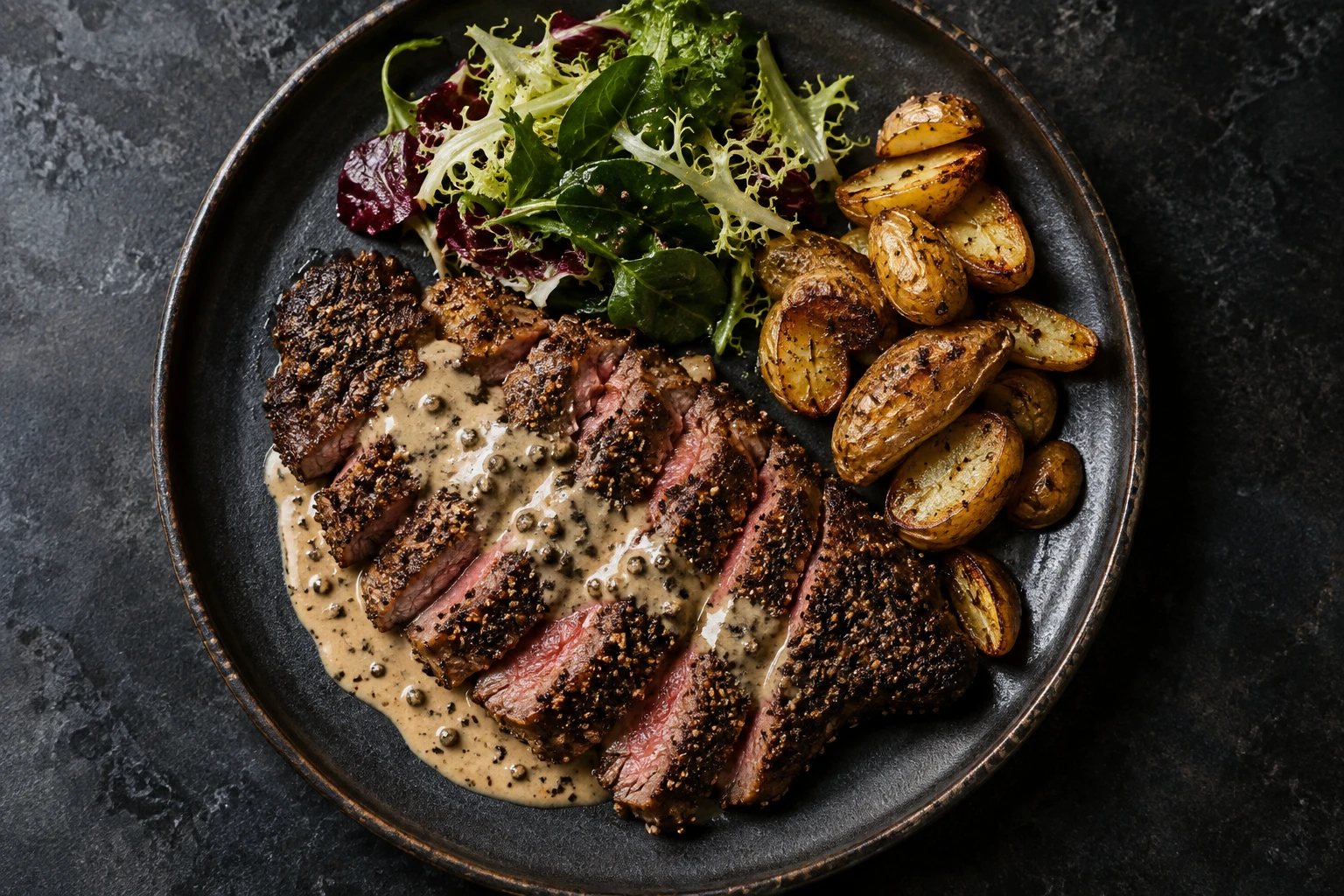
This version of steak au poivre keeps the cooking decisive: dry surfaces, coarse pepper, and a very hot skillet create the crust, while a thermometer protects the rosy center. Crisp fingerlings and sharp, bitter greens make the plate feel complete rather than merely rich.
Begin with a dry surface
An uncovered salt rest seasons the ribeyes beyond the surface and removes moisture that would otherwise slow browning. Add the pepper only just before the steaks enter the skillet so the coarse crust stays firmly attached.
Pull before the finish
The steaks continue cooking as they rest, so remove them at 125 F for medium-rare or 135 F for medium. Ten undisturbed minutes let the heat equalize and the juices settle before the meat is sliced.
Capture the fond
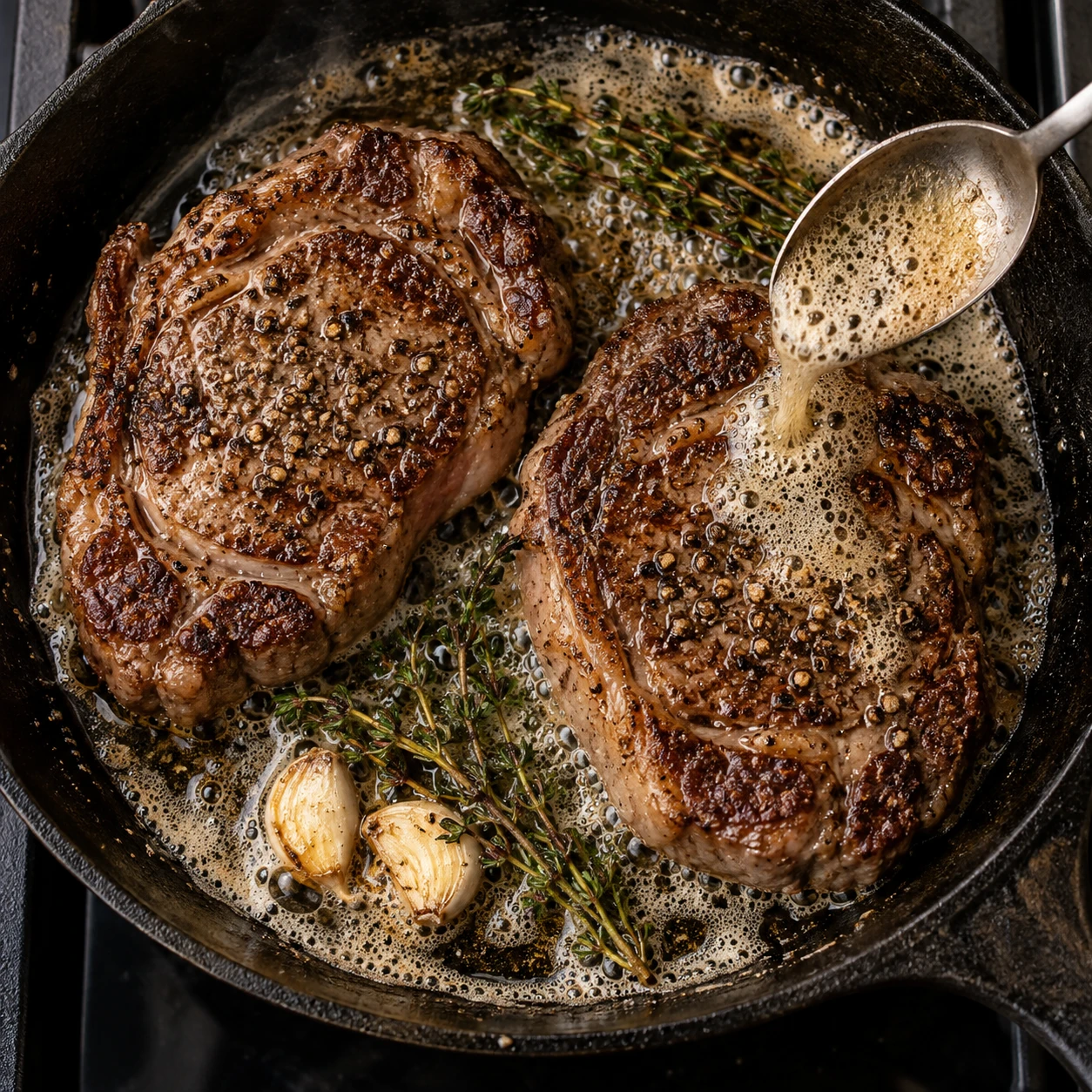
The browned layer left by the steaks is the sauce's foundation. Deglaze only after moving the skillet away from the flame, scrape every savory bit into the liquid, then reduce before adding cream so the finished sauce tastes concentrated rather than heavy.
A safe alcohol-free route
Additional beef stock lifts the fond without alcohol, while a measured teaspoon of sherry vinegar restores the cognac's missing edge. Add both off heat, then proceed with the same reduction and cream finish.
Build a balanced plate
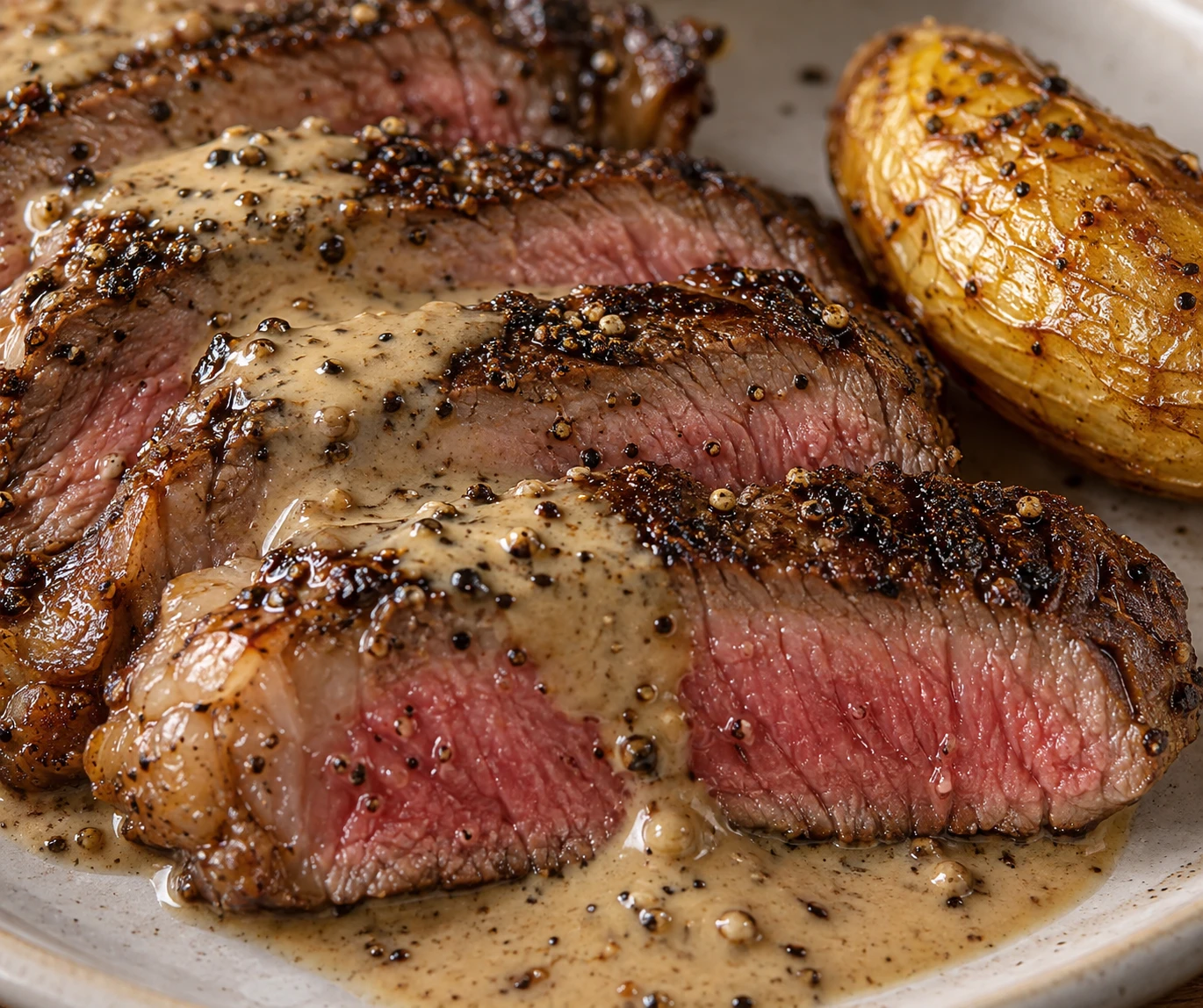
Roasted fingerlings provide crisp edges for catching the sauce, while the vinegar-dressed greens bring bitterness and lift. Slice the ribeyes across the grain and divide them among four plates so every serving gets crust, center, and sauce.
Cast-Iron Ribeye au Poivre
Ingredients
- • 2 thick-cut boneless ribeye steaks, 14 to 16 oz each and about 1 1/2 inches thick
- • 2 tsp kosher salt, divided
- • 2 tbsp whole black peppercorns, coarsely crushed
- • 1 1/2 lb fingerling potatoes, halved lengthwise
- • 2 tbsp olive oil, divided
- • 3 tbsp unsalted butter, divided
- • 2 garlic cloves, lightly crushed
- • 3 fresh thyme sprigs
- • 1 small shallot, finely chopped
- •
- • 3/4 cup low-sodium beef stock
- • 2 tsp Dijon mustard
- • 1/2 cup heavy cream
- • 5 oz bitter salad greens
- • 1 tbsp sherry vinegar
Method
Dry-brine the steaks
Pat the ribeyes dry, season all over with 1 1/2 tsp kosher salt, and refrigerate uncovered on a rack for at least 1 hour or up to 24 hours.
Look for: The steak surfaces look dry and the salt has dissolved into the meat.
Roast the potatoes
Heat the oven to 450 F. Toss the fingerling potatoes with 1 tbsp olive oil and the remaining 1/2 tsp salt; roast cut sides down for 22 to 25 minutes.
Look for: The potatoes are crisp and deeply golden underneath and tender through the centers.
Crust the ribeyes
Let the steaks stand at room temperature while the potatoes roast, then press the crushed black peppercorns firmly onto both sides just before searing.
Look for: A coarse, even pepper crust adheres to both sides of each steak.
Sear the steaks
Heat a large cast-iron skillet over high heat until faintly smoking, add the remaining 1 tbsp olive oil, and sear the ribeyes for 3 minutes per side without disturbing them.
Look for: Both sides carry a dark brown crust and release cleanly from the skillet.
Butter-baste to temperature
Reduce the heat to medium, add 2 tbsp butter, the crushed garlic, and thyme, then tilt the skillet and spoon foaming butter over the steaks until they reach 125 F for medium-rare or 135 F for medium.
Look for: The butter foams and smells nutty, and the thermometer reaches the preferred pull temperature.
Rest the steaks
Transfer the steaks to a board, spoon over the aromatic butter, and rest for 10 minutes; carryover heat should bring medium-rare steak to about 130 to 135 F.
Look for: The juices settle and the internal temperature rises about 5 F before slicing.
Deglaze the skillet
Discard the garlic and thyme, pour off excess fat, and cook the shallot over medium heat for 1 minute. Remove the skillet from the flame and add the cognac; for the nonalcoholic option, add 1/4 cup additional beef stock and 1 tsp additional sherry vinegar instead. Return to medium heat and scrape up the browned bits.
Look for: The shallot softens and the browned bits dissolve into the deglazing liquid.
Finish the pan sauce
Add the 3/4 cup beef stock and simmer until reduced by about half, then whisk in the Dijon and heavy cream and simmer until the sauce lightly coats a spoon. Remove from heat and swirl in the remaining 1 tbsp butter.
Look for: The glossy sauce leaves a clean trail when a finger is drawn across the back of a spoon.
Dress and serve
Toss the bitter salad greens with the 1 tbsp sherry vinegar, slice the steaks across the grain, and serve with the peppercorn sauce, crisp potatoes, and dressed greens.
Look for: The steak is rosy and juicy, the potatoes remain crisp, and the greens are lightly coated.