" fill="%23faf1da" stroke-width="1.8"/>%0A <ellipse cx="64.5" cy="50" rx="43" ry="12" transform="rotate(4 64.5 50)" stroke="%23938466"/>%0A <path d="m26 44 1 10m3-12 1 14m3-14 1 15m3-14 1 15m4-14 1 14m4-13 1 14m39-10-1 10m5-9-1 8m5-7-1 5" stroke="%23b2a181" stroke-width=".7"/>%0A <path d="M55 60c3-10 12-14 23-10l47-44c7-6 15-6 15-2 0 5-9 11-14 14L82 60c-8 4-21 4-27 0Z" fill="%23bc8c48" stroke-width="1.6"/>%0A <path d="M61 59c3-5 9-8 15-5l-4 7m8-8 49-45 6-4M84 52l45-41" stroke="%2376562e" stroke-width="1"/>%0A <path d="M20 53c18 14 69 19 90 2" stroke="%23514431" stroke-width="2"/>%0A <path d="M27 59c22 11 59 14 78 2" stroke="%23fff9e9" stroke-width="2"/>%0A <path d="m48 87 1 1m7 8 1 1m6-12 1 1m6 12 1 1m6-9 1 1m-24 9 1 1m19 4 1-1m10-16 1 1" stroke="%23aa9b7c"/>%0A </g>%0A</svg>%0A)
Balsamic Chicken Supper with Mashed Potatoes
A browned skillet gives balsamic vinegar and stock the savory depth for a glossy sauce alongside creamy potatoes and quick vegetables.
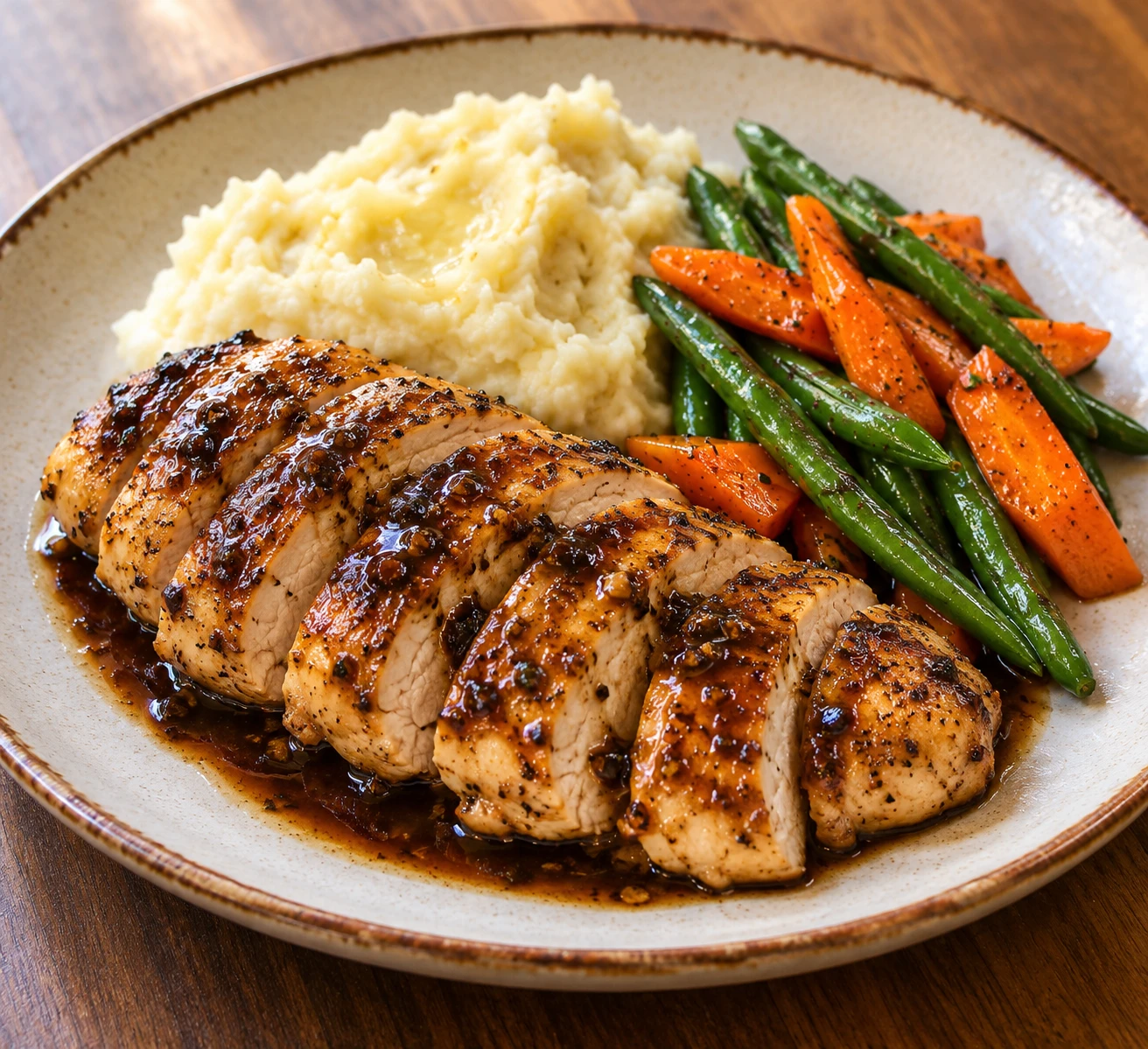
This supper keeps its moving parts manageable by starting the potatoes first and using their simmering time to sear the chicken. The same skillet then turns its browned fond into a bright, buttery sauce while carrots and green beans finish separately.
The goal is a sauce that tastes clearly of balsamic but stays balanced against mild potatoes and tender chicken. Reducing the vinegar with stock before adding butter softens its sharp edge and gives it enough body to coat each slice.
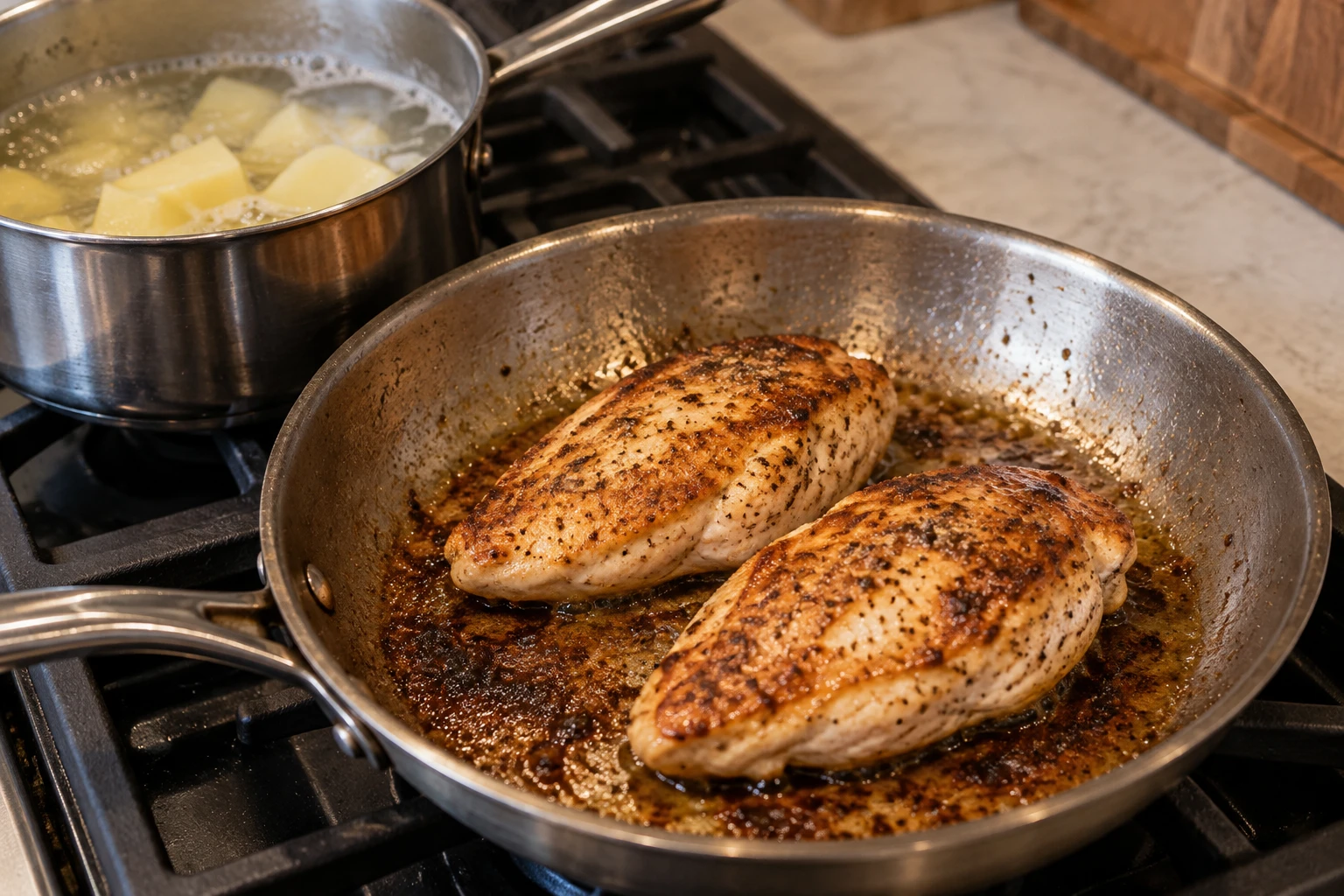
Sear for a useful foundation
Dry chicken browns more readily, and evenly thick pieces finish closer together. Check the thickest center with an instant-read thermometer; once it reaches 165 F, resting keeps the meat juicy while the sauce comes together.
Turn fond into sauce
After the chicken leaves the pan, the browned bits are concentrated flavor. Softening shallot in the remaining film of oil loosens that fond, and stock plus balsamic lift it into the sauce rather than leaving it behind.
Reduce before enriching
Let the stock and vinegar simmer until roughly half the liquid remains, then add Dijon and honey for savory tang and a gentle roundness. Whisking in butter at the end gives the reduced liquid a glossy finish without making it heavy.
Time the vegetables
Carrots need a few minutes before green beans join them, so both can finish tender without losing their shape. Covering the beans with only a small splash of water steams them quickly while keeping their color bright.
Adjust the sauce by taste
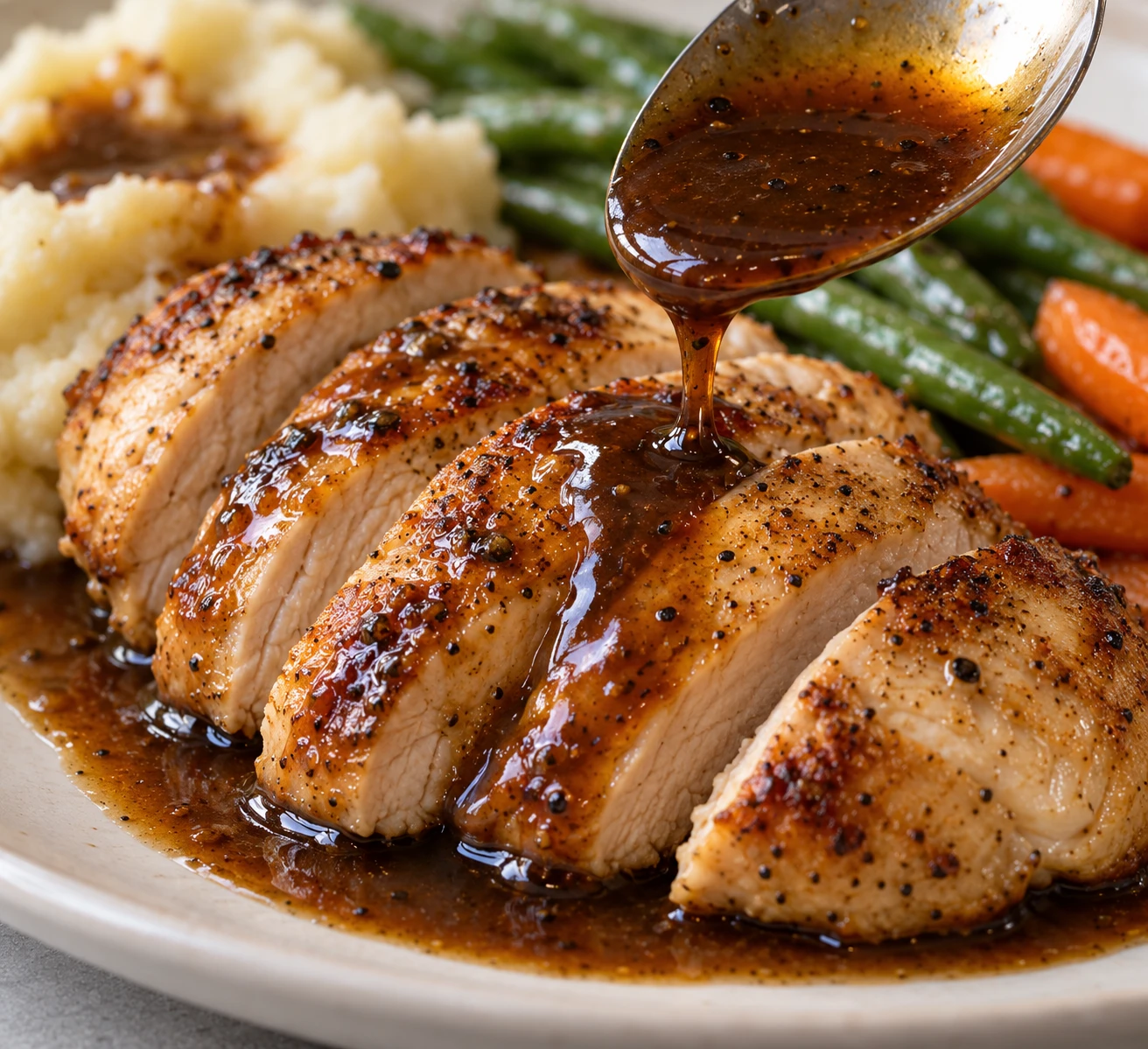
If the sauce is still thin, continue simmering before adding butter; a spoon should emerge with a light coating. If it tastes too sharp after reduction, whisk in a little additional honey and taste again rather than adding more vinegar.
Bring the plate together
Keep the mash covered over the lowest heat as the sauce finishes, and plate the vegetables as soon as they are crisp-tender. Spoon the resting juices into the sauce with the sliced chicken so its flavor carries through the final plate.
Balsamic Chicken Supper with Mashed Potatoes
Ingredients
- • 1 1/2 lb boneless, skinless chicken breasts
- • 1 1/2 tsp kosher salt, divided
- • 1/2 tsp freshly ground black pepper
- • 2 tbsp olive oil, divided
- • 1 1/2 lb Yukon Gold potatoes, peeled and cut into 1-inch chunks
- • 4 tbsp unsalted butter, divided
- • 1/2 cup whole milk, warmed
- • 8 oz green beans, trimmed
- • 2 medium carrots, peeled and cut into thin coins
- • 1 small shallot, finely minced
- • 1/2 cup low-sodium chicken stock
- • 1/3 cup balsamic vinegar
- • 1 tsp Dijon mustard
- • 1 tsp honey
- • 1 tbsp chopped fresh parsley
Method
Start the potatoes
Put the potato chunks in a saucepan and cover with cold water by 1 inch. Bring to a boil over high heat, then reduce to a steady simmer until a knife slips into the largest piece without resistance.
Look for: The water bubbles steadily rather than splashing, and the largest potato chunk is tender through its center.
Season and sear the chicken
While the potatoes cook, pat the chicken dry and season both sides with 1 tsp salt and the pepper. Heat 1 tbsp olive oil in a large skillet over medium-high; sear chicken 5 to 6 minutes per side until deeply golden, then check the thickest piece for 165 F.
Look for: The surface is browned and releases from the skillet; the thickest center reaches 165 F on an instant-read thermometer.
Rest chicken and save the fond
Move cooked chicken to a clean plate and loosely cover it. Pour off excess oil if the skillet has more than a thin film, keeping the browned fond in place for the sauce.
Look for: A thin sheen remains in the skillet and the browned bits stay attached to its bottom.
Mash the potatoes
Drain the tender potatoes well and return them to the warm saucepan. Mash with 2 tbsp butter, warmed milk, and 1/4 tsp salt until creamy; cover and keep warm over the lowest heat.
Look for: The mash is smooth and fluffy, with no watery liquid pooling at the bottom.
Cook the vegetables
Heat the remaining 1 tbsp olive oil in a second saucepan over medium heat. Add carrots and cook 3 minutes, stirring, then add green beans and 2 tbsp water; cover and steam 4 to 5 minutes until crisp-tender, then season with the remaining 1/4 tsp salt.
Look for: A fork enters a carrot with slight resistance and the beans are bright green with a tender snap.
Deglaze the skillet
Set the chicken skillet over medium heat and add the shallot. Stir for about 1 minute until softened, scraping the fond, then pour in stock and balsamic vinegar and bring to a lively simmer.
Look for: The shallot is translucent and the liquid lifts the browned bits from the pan.
Reduce and gloss the sauce
Simmer the stock and vinegar for 4 to 6 minutes until reduced by about half and glossy. Whisk in Dijon, honey, and the remaining 2 tbsp butter; taste and balance with a pinch of salt if needed.
Look for: The sauce coats a spoon in a thin shiny layer and tastes tangy, savory, and gently rounded.
Plate the supper
Slice the rested chicken across the grain and collect any plate juices. Spoon mashed potatoes and vegetables onto warm plates, set chicken alongside, then pour the balsamic pan sauce and plate juices over the chicken; finish with parsley.
Look for: The sauce clings to the chicken without pooling like thin vinegar, and all components are hot at serving.